Which Agent Trigger Surfaces Actually Close the Loop Back to a Pull Request
Native repository events preserve task context without routing delays.
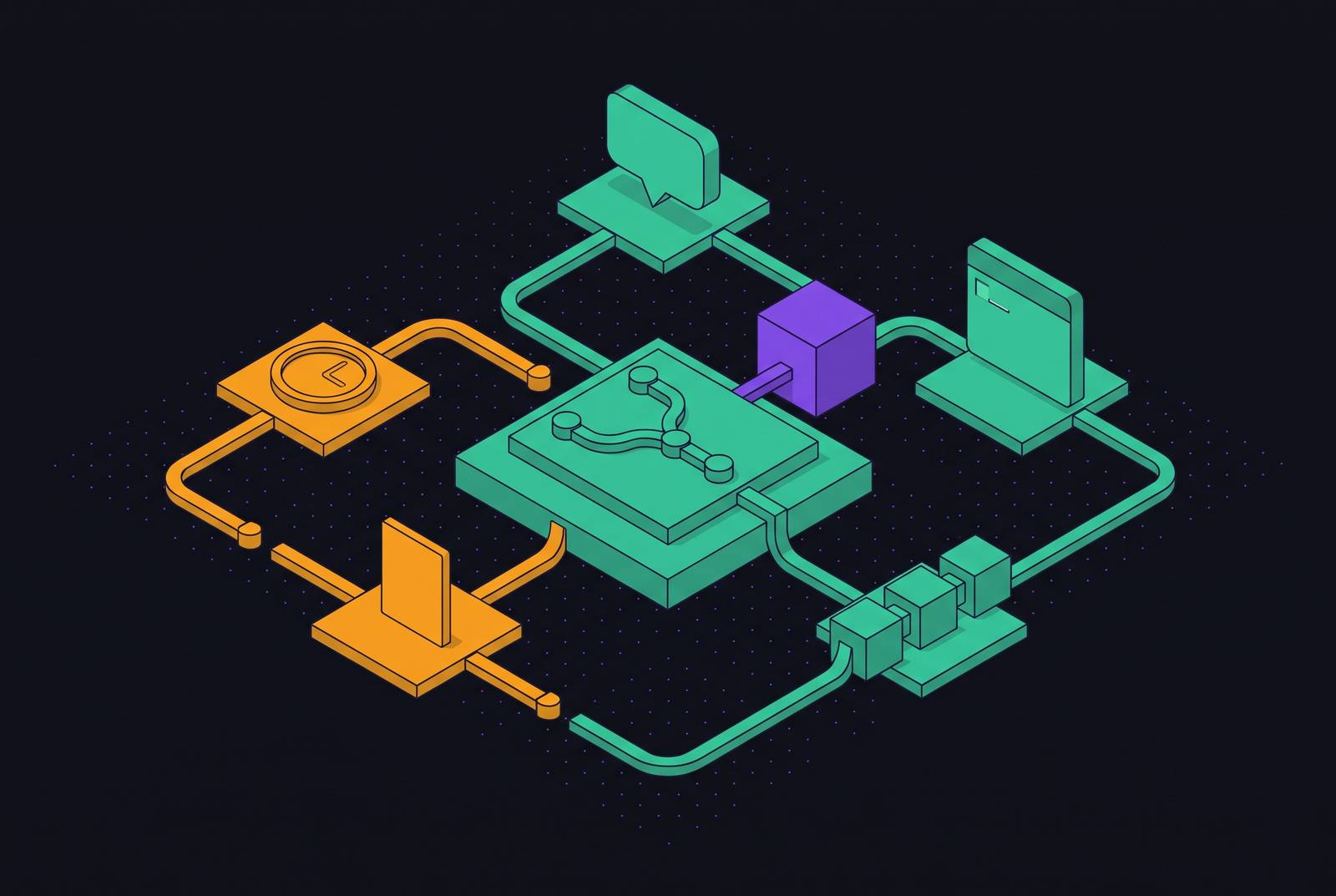
For engineering teams choosing cloud coding agents, the strongest trigger surface is a GitHub or GitLab native event because it keeps the task and pull request in the same system. Slack mentions, Linear tickets, CI/CD failures, and scheduled or monitoring webhooks can also close the loop, but each depends on a different context hand-off. The decisive criteria are repository routing, session continuity, reviewable output, and sandbox boundaries.
Why the trigger surface determines whether an agent run ends in a pull request
Starting an agent is not the same as producing a reviewable change. More agent runs are starting, but some never reach a pull request because the trigger does not preserve the task’s repository target or expected workflow. That makes the trigger surface a structural choice. It is a place to type a request, but it also controls what context the agent gets and where the result should go.
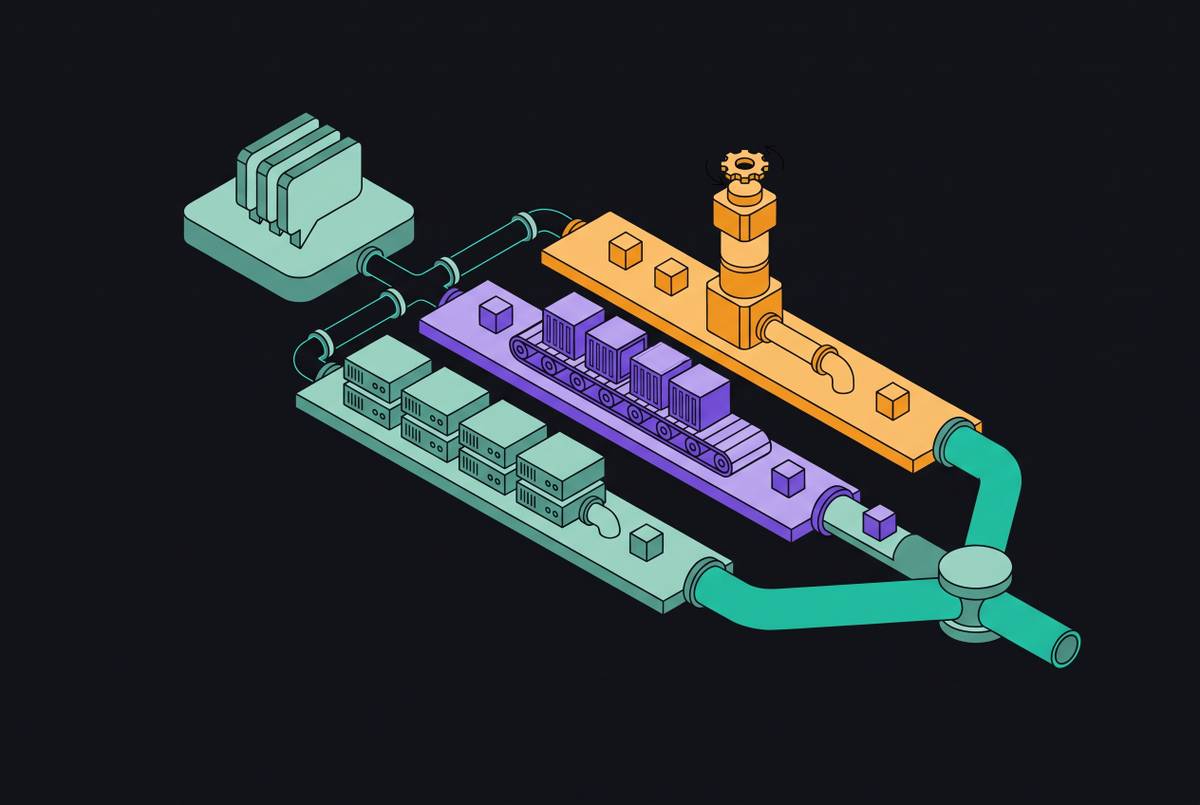
Slack is the conversational front door, GitHub and GitLab are the repo-native workbench, and Linear is the structured backlog. CI and alerting systems supply unattended triggers. When wired correctly, each routes work back to a draft PR in the repository.
GitHub and GitLab native events as trigger surfaces
Repository-native events rank first because they minimize routing hops. The agent starts in the system where the proposed change will be reviewed, so the task description does not need a separate translation into a repository target. Context is already close to the code. This is the shared advantage of GitHub and GitLab, although the concrete webhook examples here are GitHub events.
The issue_comment event with the created action supports commands such as “@bot fix the failing test,” while pull_request_review_comment with created supports responses to inline diff comments. The pull_request event with opened or synchronize can trigger review or re-review after a push. A workflow_run event completed with a failure conclusion can also start an agent, which can read the failed logs and propose a fix. These events tie the work to something already happening in the repository.
That attachment is strongest when the integration also preserves session history. A lookup table from thread ID to agent session ID lets later comments pick up the same session, keeping the diff the agent read and the tests it ran. Without it, three comments can spawn three agents that contradict one another. Cursor’s BugBot reviews PRs and proposes fixes through a Cloud Agent that can push to the existing PR branch or open a new branch. Claude Code reads repositories, runs tests, makes commits, and submits PRs from the CLI, making repository-bound workflows a natural fit for its execution model.
Slack mentions as a trigger surface
Slack ranks second because it can pass along the full task, but it adds a hand-off that repository-native events do not need. A mention closes the loop reliably when it forwards a complete task description and returns the PR link to the same thread. The conversation remains connected to the resulting change. That connection depends on workflow discipline.
Claude Code’s official Slack integration and similar setups for Codex follow the same broad pattern. A Slack message starts an agent session, which provisions a sandboxed environment, checks out the target repository, performs the work, and posts the PR link back. This gives a conversational request a concrete review destination. It also makes repository selection and workflow routing part of the integration’s responsibility.
The failure mode is unusually clear. A Slack task without a clear workflow reference, branch target, or issue link can end up on a freeform agent path that follows no git or PR discipline. The agent improvises against an empty local clone, and the task records pr_url=null. Even when the first hand-off succeeds, follow-ups can fragment across a PR comment, a Linear requirement, and a Slack message about the rate limiter. Without a shared identifier, those messages are about the same work but may reach different sessions.
Linear ticket automation as a trigger surface
Linear ranks third because a structured ticket can hold a lot of task context, but the task still needs to be routed into the repository. Acceptance criteria make the ticket a structured prompt. Linking the ticket, agent session, and resulting PR preserves the reason for the change as it moves toward review. This substitutes explicit requirements for context that a Slack conversation may leave implicit.
Linear describes coding sessions as “the shortest path from issue to diff.” Its agent works in a secure cloud environment to write and test code, then returns a draft pull request for review. The ticket supplies the task boundary. The integration must still keep the workflow reference that ties the task to work in the repository, an extra link that a native repository event does not need.
The ISLO loop shows how that connection can extend through revisions. An implementer reads the Linear issue, writes the change, runs the repository’s own tests and linters, and opens a PR. A reviewer agent then picks it up automatically. Approval leads to verification, while change requests from review or verification route back to the implementer, which resumes its session and pushes fixes. An iteration guard increments a counter before each run and exits after five, commenting on both the PR and source issue that a human should take over.
That guard gives the loop an explicit stopping point. It prevents repeated automated revisions from becoming runaway token spend while keeping the unresolved work visible in both systems. Routing remains the prerequisite, however. As with Slack, a repo-bound task arriving through a Linear webhook without an explicit workflow reference can enter the freeform path and return pr_url=null.
CI/CD failure webhooks as a trigger surface
CI/CD failure webhooks shift the trigger from a human request to a machine-detected failure. No developer needs to write a message or assign a ticket before the agent starts. That makes this surface especially useful for maintenance. Unlike a conversational request, the trigger arrives with a failed check or build as its immediate context.
Elastic Control Plane integrated Claude into its build pipelines to work on Renovate-generated PRs. Claude analyzes failed Gradle build logs, iterates over fixes, and commits to the PR branches. This is an important distinction within loop closure. The agent does not always need to open a new PR, because repairing an existing dependency-update PR can bring the work back to the same review destination.
GitHub Agentic Workflows can analyze CI failures, distinguish transient from permanent failures, and create fix PRs automatically. Human review and approval are still required before merging. Another way is to do verification earlier, running the same checks before the PR opens and fixing failures while the agent still has the task context. Swamp Engineering reported that before this loop, 25% of PRs hit a CI failure that required a fix and another round trip. In that pattern, CI becomes a validator rather than the first place the failure is discovered.
This surface does not rank higher just because it starts work on its own. Its safety demands increase because a system event can start work without a fresh human decision. The recommended “propose/dispose” split gives the agent job read access and no deploy secrets, then places writes in a downstream job behind required human approval. An unattended agent with unrestricted writes lacks that boundary.
Scheduled and monitoring-system webhooks as a trigger surface
Scheduled and monitoring-system webhooks rank fifth as a less common but legitimate route for maintenance that no person thought to request. Dependency updates, drift remediation, and performance regression fixes can begin from a condition. The distinction from CI is the trigger. A schedule or threshold starts the work, rather than a completed build reporting failure.
The execution pattern is otherwise similar. A cron job or alerting system fires a webhook, and an agent reads the relevant state, such as a stale dependency, drifted configuration, or degraded metric. It then opens a PR proposing a fix.
Bunnyshell illustrates the corresponding value of an ephemeral environment lifecycle. Its environments are created on PR open, updated on push, and destroyed on merge or close. Scheduled triggers also benefit from having cleanup built in, while keeping the propose/dispose split and short-lived, scoped credentials for a dedicated agent identity.
What the merge data shows about which surfaces produce PRs that reviewers actually accept
Opening a PR establishes delivery. The brief says that, overall, agent-initiated PRs have a higher merge rate than comparable human-authored PRs, but it names no dataset and gives no breakdown by surface. That limits what the comparison can establish. It does not show that a Slack-triggered PR is more likely to merge than a Linear-triggered one, or that any particular agent is responsible for the difference.
Most agent-initiated PRs change more than one file, and they do so more often than PRs without an agent signal. A higher merge rate does not, by itself, explain how much investigation reviewers needed or how well each trigger preserved the original requirements.
The more useful quality distinction is between a PR that merely exists and one that arrives with enough evidence to review. A linked issue, test results, and a recording can keep track of why the task was needed and what the agent did. Context stripped in transit leaves reviewers with more to reconstruct. Repository-native triggers reduce that risk structurally, while Slack and Linear integrations depend more heavily on explicit links and session continuity.
These limits make the merge evidence insufficient as a standalone ranking of trigger surfaces. Prompt injection, hidden backdoor injection, and low-quality output flooding review queues are risks of insufficiently constrained environments, even when work reaches a PR. The surface shapes how well the task holds together, while the sandbox sets what the agent is allowed to do along the way.
The sandbox environment that an agent runs in shapes whether any surface closes the loop safely
The sandbox is the constraint shared by all five surfaces. Even a request routed to the right place can lead to an unsafe result if the agent can use host secrets, has unrestricted networking, or has write permissions it does not need. A PR is not itself a safety boundary. The environment sets what the agent can read, run, and change before review starts.
At a minimum, the safe setup described here puts agent tools in a sandbox without host secrets, mounts the repository read-only, and gives them one writable output directory. Networking is either offline or routed through an allowlist proxy. Credentials are short-lived, scoped, and assigned to a dedicated agent identity. Patches are mechanically validated before review, and writes occur in a separate downstream job behind required human approval. These controls give the propose/dispose split an enforceable boundary rather than leaving it as an instruction to the agent.
Codex uses OS-level sandboxing, including Apple’s Seatbelt on macOS and bubblewrap and seccomp on Linux, with Landlock retained as a legacy fallback. Cursor runs background agents in sandboxed cloud VMs with their own full repository clone, while local parallel agents use git worktrees. Claude Code is bounded by the CLI permissions the team configures. These are distinct execution models.
For engineering teams choosing cloud coding agents, those differences belong in the comparison with Slack support, issue routing, and automatic PR creation. A managed cloud environment can supply the workspace, but its permissions still define the agent’s reach. That becomes especially consequential when CI or monitoring starts a run without a person initiating the task. The trigger surface determines how work enters the loop, and the environment is equally important in determining whether that loop closes safely.