Comparing Managed Cloud Agent Platforms on VM Isolation Depth and Team Overhead
Deeper isolation means less work for teams managing deployed coding agents.
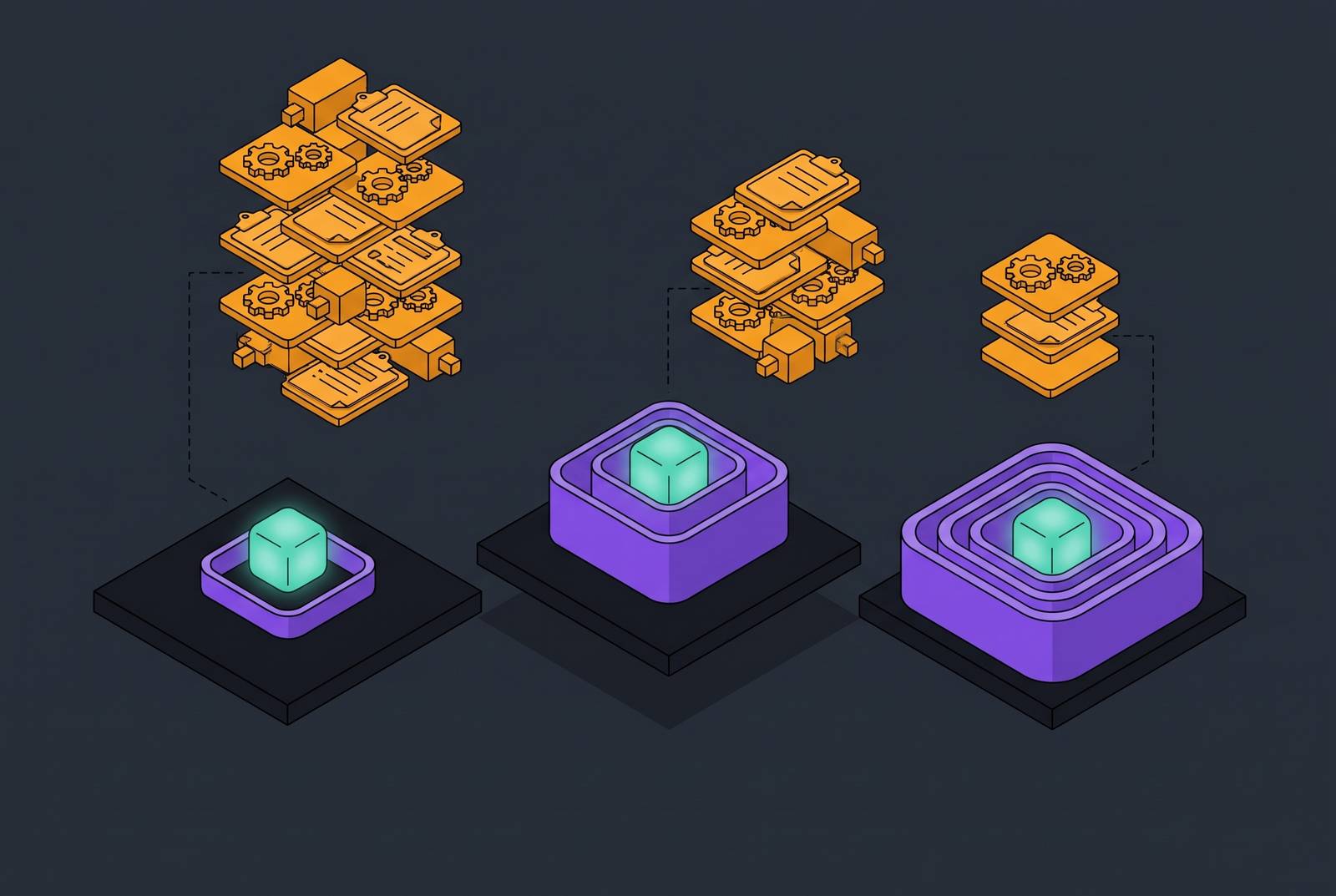
Managed cloud coding agents are best evaluated by the work their environments remove from engineering teams. Comparing platforms on VM isolation depth and team overhead reveals a single trade-off. The execution boundary, persistence model, and deployment access determine how much security, setup, and verification work remains with the team.
Why the agent's execution environment is a security boundary, not just an infrastructure choice
By the time a human reviews a diff, dozens of filesystem operations have already happened. Coding agents read and edit repositories, run builds and tests, install packages, and can work for an hour or more without supervision. Review happens after execution has already begun. The environment therefore absorbs risks that a later code review cannot prevent, including what a prompt injection or a compromised dependency can reach.
Depending on the isolation boundary, that reach stops at the agent’s files or extends toward neighboring workloads and the host kernel. Tool defaults differ substantially. Claude Code offers opt-in sandboxing through Bubblewrap on Linux or Seatbelt on macOS, while Cursor’s tool-level process isolation is not on by default. Codex CLI includes Landlock and seccomp isolation enabled by default. Teams running tools without enabled sandboxing in automated or shared contexts must provide the isolation infrastructure themselves.
The isolation primitives platforms actually use and what separates them
Standard Linux containers isolate the filesystem, process tree, and network namespace but share the host kernel. That shared kernel is the critical distinction. A kernel exploit can breach a boundary that otherwise separates processes and files. Containers work for trusted workloads, but plain containers are not enough for untrusted AI-generated code in multi-tenant environments.
Hardened container runtimes reduce exposure without adding hardware virtualization. gVisor interposes a user-space kernel between the container and host, reducing the host kernel’s attack surface. Sysbox provides VM-like container capabilities while retaining a shared Linux kernel. These approaches improve on plain container isolation. Neither has the dedicated, hardware-enforced kernel boundary that a VM has.
MicroVMs give each workload its own Linux kernel with hardware-enforced separation. Firecracker, AWS’s open-source microVM technology, boots a dedicated kernel in well under a second and supports a small set of device types, reducing attack surface compared with full QEMU. Cloud Hypervisor is another microVM primitive used for agent environments. Full VMs provide maximum isolation with higher startup latency and resource overhead. A product’s use of the word “sandbox” leaves teams to evaluate both the boundary and its operational cost.
How each major platform sits on the isolation spectrum
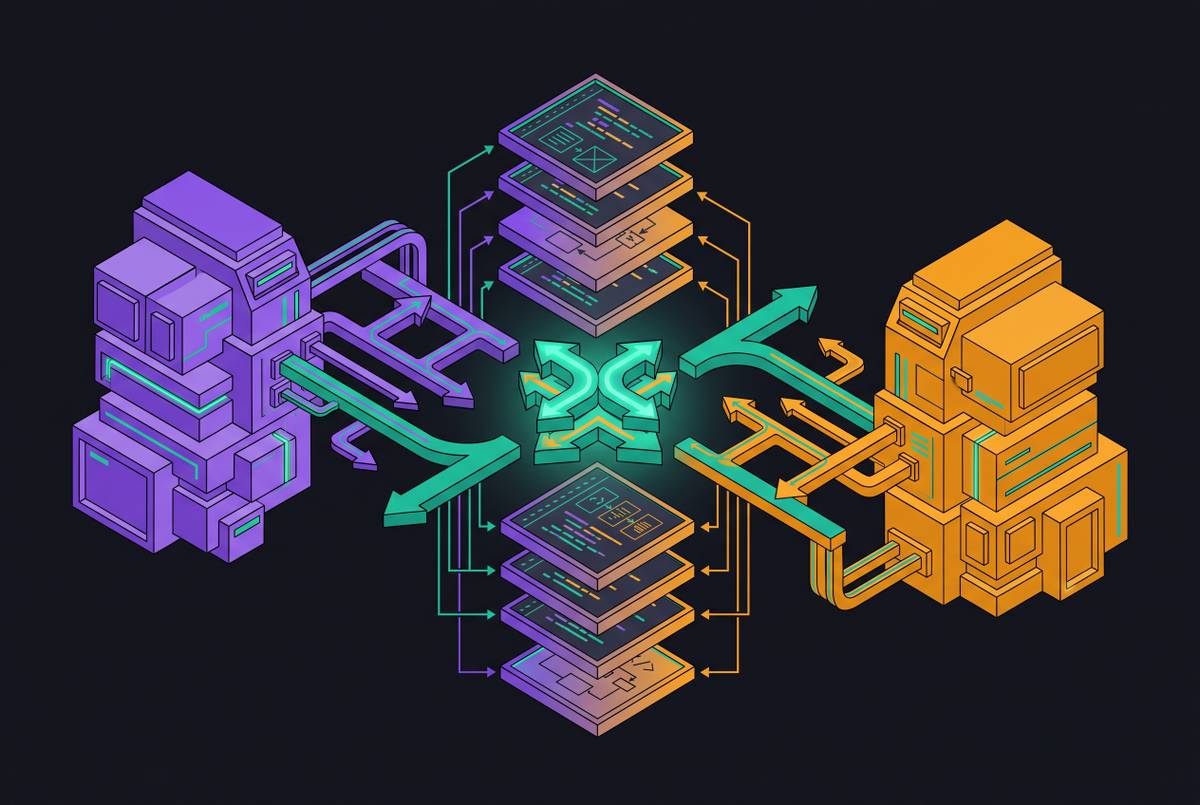
Northflank Cloud Harnesses use Cloud Hypervisor microVMs for CPU workloads, giving each Harness its own hardware-enforced kernel boundary. Workspace files, branches, and installed packages persist across pauses, restarts, and redeployments by default. Persistence can be disabled for throwaway environments. Team Harnesses support simultaneous access, while private Harnesses restrict access to their creator. The same platform runs application deployments, preview environments, databases, and CI/CD, connecting agent execution to the services being built.
Northflank supports Claude Code, Codex, Cursor, OpenCode, Pi, and other CLI-based agents through Bring Your Own Agent. Its Git integrations include GitHub, GitLab, Bitbucket, Azure DevOps, and Cursor Origin, plus self-hosted options. Lifecycle control is available through its API. Northflank Skills also let an agent provision a Harness, work on a repository, deploy an application, and manage preview environments through natural-language instructions.
GitHub Codespaces provides a repository-scoped dev container for teams seeking a familiar GitHub environment. GitHub-hosted Actions runners provide a separate execution option for Claude Code, with a secure-by-default hosted sandbox. Their verification scope is narrower than deployment infrastructure. In the configuration described here, agents can generate code and run unit tests but cannot access staging, deploy applications, or produce preview URLs.
Daytona defaults to Sysbox, which provides VM-like capabilities without hardware virtualization and shares the host kernel. It supports paused state for up to 30 days and is SOC 2 Type II certified. Its production codebase became closed-source in June 2026. Modal instead uses gVisor, offers usage-based pricing, and caps sessions at under a day, with memory snapshots expiring after a short window. These limits affect how teams save work that is still unfinished. Cloudflare Sandboxes reached general availability on April 13, 2026, with each sandbox running inside its own VM.
OpenAI Codex runs parallel coding tasks in isolated cloud sandboxes. At its May 2025 launch, the agent phase had no internet access, although setup scripts retained network access. Optional internet access followed after user feedback. Codex can write code and run tests, but deployment and end-to-end verification remain outside that sandbox workflow. Cursor Cloud Agents run in isolated VMs, separating their hosted infrastructure boundary from Cursor’s tool-level process isolation.
How isolation depth translates into team overhead
A managed, agent-ready environment takes care of configuration work that teams would otherwise have to do when adding an agent to CI/CD. Shared-kernel infrastructure requires attention to container configuration, kernel versions, and escape mitigations, while microVM platforms absorb more of that work at the infrastructure layer. Platform certifications can also reduce what teams need to review, though teams still have their own obligations to meet.
Failure diagnosis depends on how state is separated. In shared environments, engineers may need to distinguish failures in the agent or code from interference through shared infrastructure. Isolated runs reduce that debug surface. Keeping the environment up to date also takes ongoing work, including dealing with dependency drift, image updates, and secret rotation. Managed infrastructure absorbs platform maintenance, while persistent workspaces avoid repeatedly rebuilding the agent’s working environment.
The verification gap deserves a separate accounting. A sandbox that writes code and passes unit tests has not necessarily verified a deployed application. Codex’s sandbox workflow and the GitHub-hosted runner configuration described above leave that last step with engineers. Session limits add another burden when teams must orchestrate task decomposition and state hand-off to avoid losing progress.
The agent choice layer: how Claude Code, Codex, Cursor, and Opencode sit inside this infrastructure picture
Agent selection and infrastructure selection are separate decisions. Choosing an agent’s native cloud environment couples its capabilities to that environment’s execution and verification limits. A managed platform supporting multiple agents loosens that coupling. The operational benefit is the ability to change agents without rebuilding repository access, persistence, and deployment infrastructure.
Claude Code supports multi-agent work, with an agent view added in v2.1.139 and fork subagents turned on by default across supported interfaces in v2.1.302. Anthropic relaunched Claude Code Projects on September 17, 2026, with a coordinator in charge of parallel cloud sessions. Team Standard and Team Premium tiers are available on annual or monthly terms. Its tool-level sandbox remains an opt-in boundary, distinct from the managed environment in which it runs.
Codex subagents reached general availability on March 14, 2026, supporting delegation within automated workflows. Codex CLI’s default isolation is distinct from its cloud task-container model. Cursor has both a local editor and hosted cloud VMs, with Business/Teams pricing per user. Its Projects beta launched on September 10, 2026, with a coordinator delegating to other agents.
These differences support choosing an environment that lets teams match agents to tasks. Patterns in how the community uses these tools link Claude Code to architecture and debugging, Codex to automation and delegation, and Cursor to building features quickly.
Long-running tasks, context management, and what happens when agents work for hours inside an environment
Tasks that run for a long time can hit limits that stay hidden in short sessions. Context overflow can lose information the agent needs to finish a task, while context drift can leave recent actions in view but hide what the task was meant to do. Dense model and tool usage can also make costs unpredictable. Infrastructure does not solve these problems by itself. With suitable infrastructure, the agent can use parallel work and durable state to manage them without repeated setup.
Decomposition replaces one long sequence with shorter, focused tasks. Each subagent gets a fresh context window, while the lead agent tracks progress at the level of overall status. That arrangement requires more than agent coordination features. The environment must support parallel isolated runs and a persistence and networking model that permits shared or handed-off state. Multi-agent support in Claude Code and Codex therefore shifts attention toward what the hosting environment can sustain.
Modal’s session and snapshot limits and Daytona’s maximum paused period define different constraints on task continuity. The value of persistence, separate from retained model context, is that a resumed or replacement agent does not also need to reconstruct the working environment before continuing.
What the overhead difference looks like in practice for engineering teams at scale
Productivity gains from agentic workflows are real but uneven. Those gains are useful when faster generation leads to code that has passed review, been verified, and is ready to deploy. Environment architecture shapes that conversion. It helps run and verify code, but the agent and the wider engineering workflow also shape the result. When comparing infrastructure, teams should separate how much productivity rose from claims about what made it rise.
Salesforce Engineering’s April 2026 measurements reported a 50.8% year-over-year increase in work items completed per developer. The report identified the organization-wide move to Claude Code as the biggest inflection point and also emphasized its rule-based agentic workflow framework. Both were part of the reported change. An agentic workflow also helped a product team complete a migration in under two weeks that would otherwise have required months of person-days.
Higher throughput does not always make delivery more stable. More generated code can increase review time when verification capacity does not grow with it. The implication for platform evaluation is concrete. An environment that supports deployed verification handles work that comes after code is generated, while a sandbox-only workflow leaves that work to be done elsewhere. Isolation also limits what unsafe execution can reach, but it does not establish that generated code is free of vulnerabilities or ready for production.
Which cloud coding agent platform best fits a team’s isolation and overhead requirements?
Teams should assess each platform property by the work they would have to do without it. The first criterion is the isolation primitive. With a microVM boundary, the platform takes on more of the work of kernel-separation, while shared-kernel containers leave the team with more container-security review to do. Teams using Process-level isolation alone need more infrastructure for automated or shared execution. Certifications such as SOC 2 Type II, ISO 27001, and a HIPAA BAA can narrow procurement and security-review work where applicable.
Workspace survival across pauses, restarts, and redeployments reduces repeated setup, while session caps and expiring snapshots create hand-off requirements. Agent portability prevents another class of rework. A platform that supports multiple CLI-based agents lets the team change models or harnesses while keeping the environment around them. Northflank fits these criteria through persistent Harnesses and its support for multiple named agents and Bring Your Own Agent.
If agents must deploy applications, use databases, and produce previews, a code-and-test sandbox does not cover the full requirement. Data residency adds a separate constraint. Northflank offers self-serve BYOC in a team’s own AWS, GCP, Azure, Oracle, or CoreWeave account. Teams with residency requirements must find another way to meet them if they choose a managed-cloud-only option.
For workflows initiated from Slack, Linear, GitHub issues, or GitLab, the evaluation should establish how runs are triggered and how output is measured by run, model, and credential. Those connections affect recurring orchestration work. The final decision depends on how well each platform absorbs the team’s specific burdens across isolation, persistence, agent choice, verification, compliance, and residency. Feature count and headline price are incomplete measures without that accounting.