Claude Code vs Codex for Autonomous Pull Request Generation
Architecture matters more than model scores for autonomous pull requests.
As of September 29, 2026, Claude Code and Codex both moved to new default models on the same afternoon: Claude Code to Claude Opus 5.5, Codex to GPT-6.1 Sol. Any comparison written before that date is already describing a lineup neither tool ships anymore, which says something important about how to evaluate these tools in the first place: chasing the latest model release is a losing game. On DeepSWE, the benchmark most commonly used to rank coding agents, the two tools' top models land within a few points of each other. At that level of parity, picking a tool because its benchmark score is marginally higher is close to picking at random.
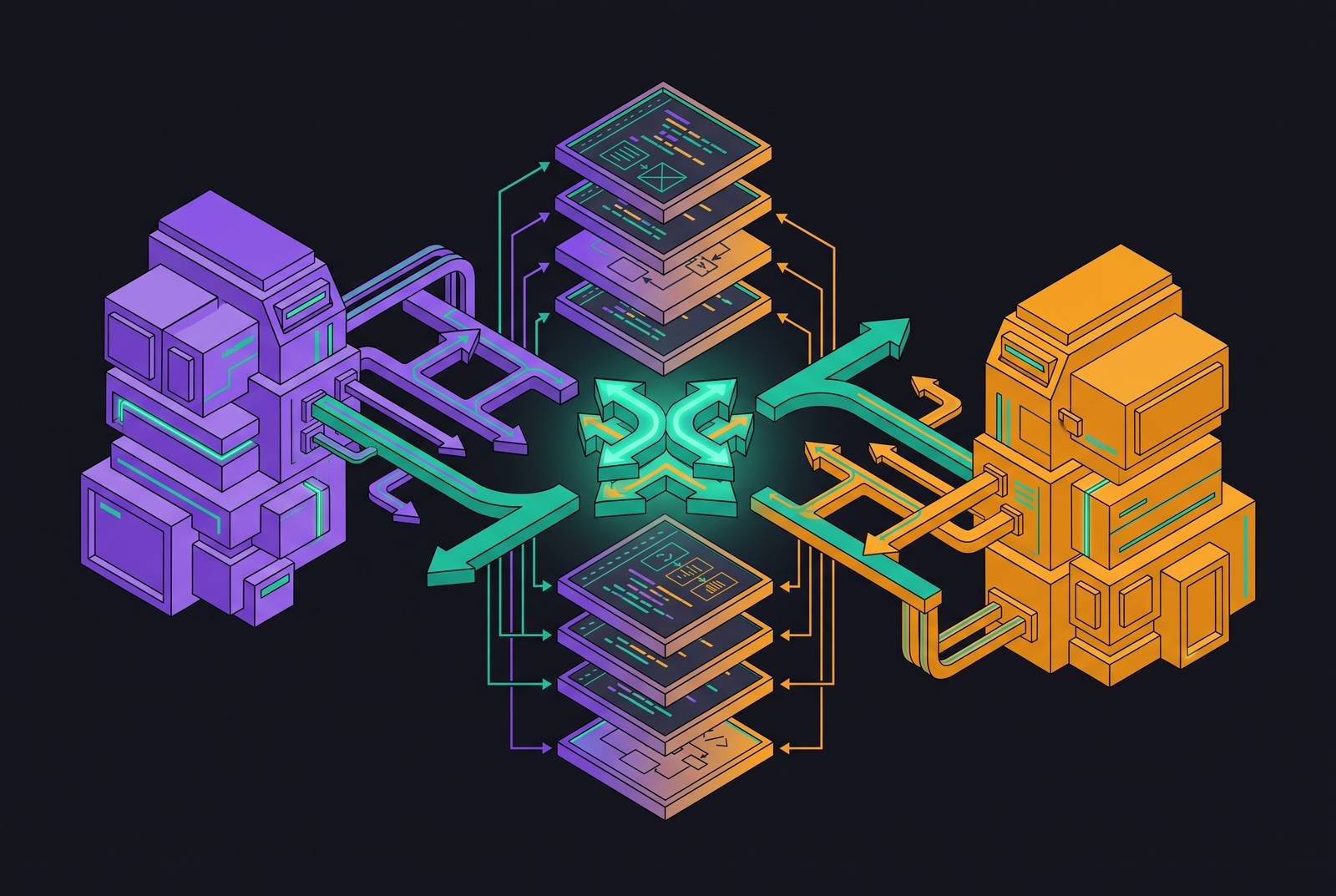
The real decision for a team trying to automate pull request generation is which workflow architecture can reliably get a task from assignment to a merged pull request without breaking how the team reviews code, not which model scores higher on a given benchmark. That's a question about task delegation, sandboxing, and the handoff back to human reviewers, not about raw model capability. Benchmark scores aren't meaningless: they reflect real differences in reasoning and code generation quality, and they still belong in the decision as a tiebreaker when everything else is equal. But in practice, architecture swamps a two- or three-point benchmark gap long before that gap becomes visible in a pull request. The sections that follow lay out why.
What each tool is: local supervisor versus cloud delegator
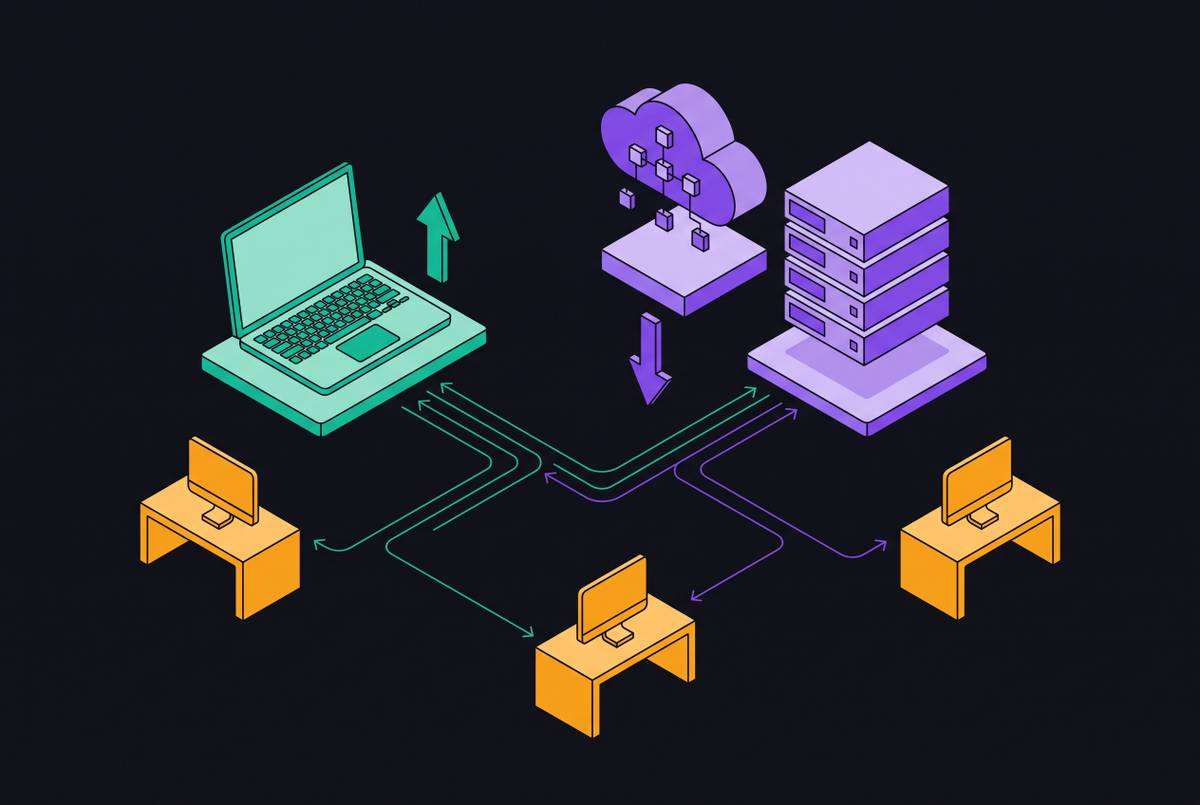
Claude Code and Codex start from opposite assumptions about how much a human needs to stay in the loop. Claude Code is built as a supervised, local-first agent: it runs directly against the developer's own filesystem, and the repository never gets uploaded to a cloud sandbox. Codex is built as an autonomous cloud executor, designed to take a task, disappear, and come back later with a finished pull request.
Claude Code's current lineup, as of September 22, 2026, defaults to Claude Opus 5.5, with Claude Fable 5.1 serving as the frontier model and Haiku 4.5 as the cheapest option. All four current models, Fable 5.1, Opus 5.5, Sonnet 5.5, and Haiku 4.5, carry a large context window and bill at a flat per-token rate no matter the size of the request. Since August 2026, Claude Code has defaulted to "auto" mode, in which a classifier reviews proposed actions instead of stopping to ask the developer about each one individually. Version 2.1.280, released September 22, 2026, made Opus 5.5 the default Opus model, and Pro and Team Standard subscribers moved from Sonnet to Opus in that same release. Claude Code also has native Model Context Protocol support, which connects it to databases, APIs, design tools, or other custom data sources without custom glue code.
Codex's frontier model is GPT-6 Astra, with GPT-6 Luna as the cheapest tier, a price point that has no direct equivalent on the Anthropic side. In July 2026, the standalone Codex desktop app was folded into the ChatGPT desktop app, putting both under one roof. Codex uses Git worktrees to run separate tasks in parallel without one task's working directory interfering with another's. Claude Code can't do that at all, but it reads AGENTS.md files with per-directory hierarchy support. Codex's entry plan includes a genuine free tier alongside a paid Go plan, making it the only one of the two tools with a no-cost way in. Its sandboxing runs at the operating system level: Apple Seatbelt on macOS, Landlock LSM and seccomp-bpf on Linux, which enforces isolation at the kernel rather than relying on the model to police its own permissions.
Neither design is wrong. They're built for different defaults: one keeps a person checking the agent's work step by step, the other hands off the work and expects a finished product on return.
Task routing from assignment to open pull request
The gap between "here is the task" and "here is the pull request" is where the two tools diverge in practice, and that gap predicts where each one holds up or breaks down inside a real team pipeline.
Codex's path leans on parallelism and distance. Its Git worktrees let multiple agents work on separate tasks at once without merge conflicts, and a ChatGPT Pro subscriber can run several agents at once from the dashboard. The output is a pull request with full diffs, test results, and, in some setups, a demo recording attached. Because the model is async and fire-and-forget, the PR lands in the queue after the engineer has already moved on to something else. That's genuine delegation rather than assistance: the developer isn't present for most of the work that produced the result.
Claude Code's path runs through two separate GitHub integration modes. One is the anthropics/claude-code-action GitHub Action, and it fires on workflow events, a comment with @claude on an issue, or any new pull request with code changes via claude-code-review.yml. The other is Claude Code cloud routines, and these run on Anthropic-managed or self-hosted infrastructure and trigger on selected PR or release events. Anthropic's own documentation lists routing a bug report from Slack straight into a pull request as a first-class use case: mention @Claude in a Slack thread with a bug description, and get back a link to an open PR. Plan mode adds a deliberate checkpoint before any of that execution starts, the agent lays out a structured plan, a human reviews and approves it, and only then does it write code. That checkpoint is good for quality control and a real friction point for a team trying to build a fully autonomous pipeline. Without a third-party cloud platform layered on top, running Claude Code persistently in the background means the team has to stand up and maintain its own server.
The gap between the two comes down to defaults. Because Codex's design is cloud-native, you get fire-and-forget delivery on its own. Because Claude Code's design is local-first, a team has to build toward that same outcome, and that usually takes extra infrastructure or integration work. Full attribution, which model, which harness, and which invocation method produced each pull request, and how long it took, turns architecture preference from a guess into something a team can actually measure. Platforms that run coding agents in isolated cloud environments can surface that attribution automatically, which lets a team see not just which tool it prefers on paper but which one actually closes the loop from task assignment to merged PR in its own setup.
How team standards travel into the agent's execution environment
If a pull request doesn't follow the codebase's conventions, test requirements, or architectural rules, it creates review work, and that cancels out whatever time the automation saved. How each tool carries team standards into an autonomous run matters as much as the run's output.
Claude Code relies on a human-authored project file that loads at the start of every session, and it serves as the explicit source of truth for build commands, coding conventions, architecture decisions, and project-specific rules. Alongside it sits a hooks system, which acts as a compensating control: teams can force linting on every file write, or block dangerous commands outright at the tool-call level, independent of whatever the model happens to remember from the session.
Codex takes a different route through AGENTS.md, which it reads with per-directory hierarchy support, so a monorepo can carry different standards at different levels of its folder structure without extra configuration. Its full-auto mode pairs with OS-level sandboxing, Seatbelt on macOS and Landlock on Linux, so the agent has to operate inside kernel-enforced boundaries no matter what the model decides to try. The sandboxing enforces that boundary structurally, independent of whatever instructions the model is given. GPT-5.1-Codex-Max was trained specifically for context compaction, so a long autonomous run is less likely to lose track of its own instructions partway through.
That split has a direct practical consequence. Claude Code's standards live in memory, so compaction during a long session can wipe them out. Codex's standards live in the filesystem and in kernel-enforced boundaries, which makes its enforcement structural and less dependent on how well the context window holds up over a multi-hour task. The strongest case for Claude Code's side is that hooks give teams finer, more scriptable control than a text file like AGENTS.md can offer, and that's a fair point: for a team with complex, conditional enforcement logic, hooks genuinely do more. But hooks take engineering time to set up and maintain, while AGENTS.md is a file anyone on the team can open and edit directly.
Claude Code's local-first design means the repository never leaves the developer's machine, while Codex's autonomy assumes a sandboxed execution environment sitting outside the developer's regular coding environment. That split mirrors a larger shift in how teams are starting to deploy agents generally: Codex's model lines up with cloud-first platforms that isolate agent work in independent environments already loaded with a team's dependencies, letting several agents run in parallel without stepping on each other's working directories.
Security surface of an automated PR pipeline
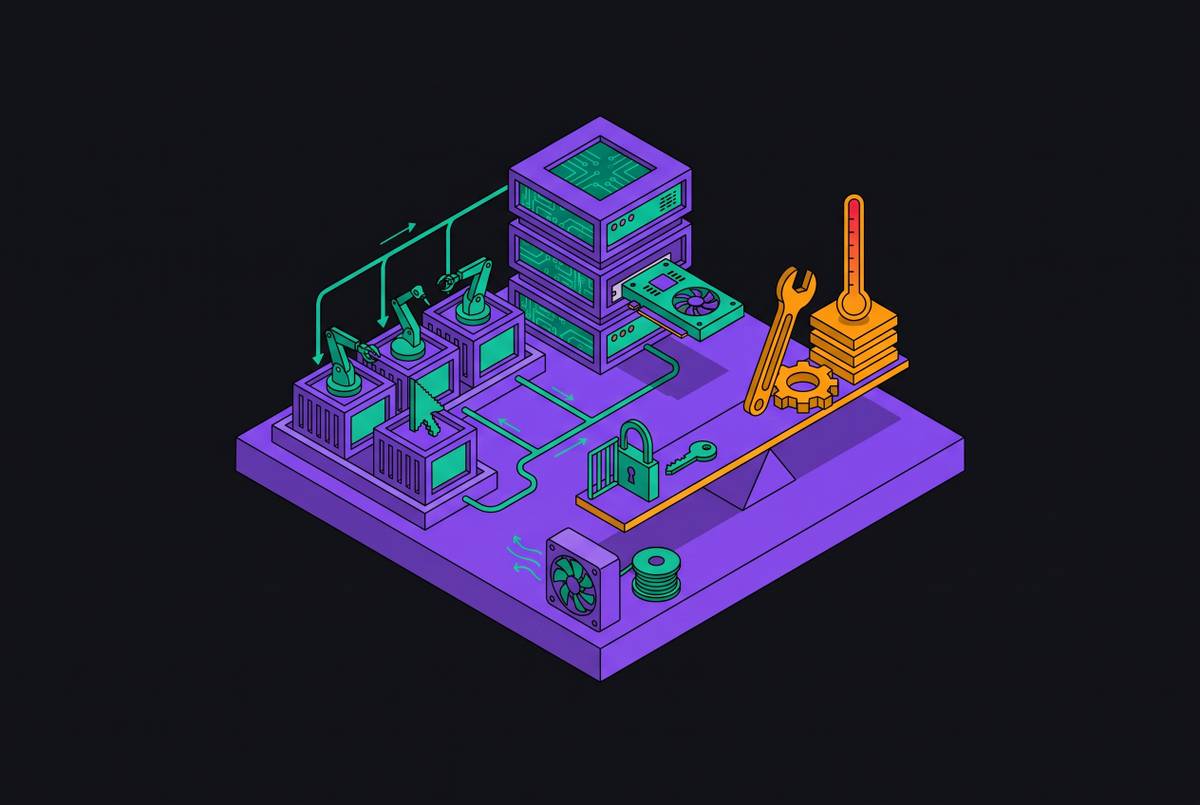
When you automate pull request generation, you open up a kind of attack surface that interactive AI coding assistance doesn't have, because there a person watches every suggestion before it's accepted. Any agent with write access to a repository and network access to outside services can, if misconfigured, leak credentials or pull in a malicious dependency. The same automation that makes the pipeline productive can make it dangerous if you leave it unguarded, so you need deliberate configuration on both tools to close that gap.
Claude Code's mitigation runs through a permission-based model: by default, it asks before executing commands or writing files, and hooks can whitelist specific operations, allowing something like npm test while blocking something like rm -rf. Its local-first design also limits the network attack surface on its own terms, because the repository stays on the developer's machine instead of getting shipped off to a remote environment.
Codex leans on OS-level sandboxing, Seatbelt and Landlock, for kernel-enforced isolation, and its full-auto mode disables network access entirely during execution. Running in a cloud VM also means the agent never touches the local development environment at all, which removes an entire category of risk around credentials stored on a developer's machine.
HubSpot's own response to this problem is instructive. Rather than adopt an external product, the company built its own agent execution platform, called Crucible, so it could sidestep authentication and network access concerns. Because HubSpot recreated its local development environment on its own infrastructure, it got a level of control that an external cloud sandbox couldn't give it. In Codex's async, fire-and-forget model, the PR shows up while the engineer has moved on to other work, but this depends on genuine task isolation so one run doesn't contaminate another. Teams running several agents against the same codebase need the kind of per-task isolation that Codex's Git worktrees provide locally, or that a cloud platform provides at the VM level, to keep one agent's work from bleeding into another's working directory. Teams with strict security requirements need to look past what a tool claims to do and check what its sandbox model actually enforces at the operating system level, not just what its documentation promises.
Review queues and team throughput when AI PRs arrive at scale
The real constraint on autonomous pull request generation is how fast the team's human reviewers can absorb what comes back, not how fast the agent works. If an agent ships pull requests faster than reviewers can read them, it simply builds a backlog, and that backlog eats into whatever throughput gain the automation was supposed to deliver.
When teams lean hardest on AI-generated pull requests, they end up merging far more of them, while review time climbs sharply at the same time. The net effect is a real but modest organizational gain, not the clean doubling of output that raw PR volume would suggest on its own. If the review queue just grows to absorb the difference, more pull requests flowing in doesn't mean more value flowing out. That's the condition under which workflow architecture, not benchmark scores, ends up deciding whether an autonomous PR pipeline actually works for a given team: the tool that wins is the one whose delegation, sandboxing, and standards enforcement fit the team's review capacity, not the one with the marginally higher DeepSWE number. Replicas, which runs Claude Code, Codex, and others in isolated cloud VMs and returns pull requests for human review, is one way teams avoid building that infrastructure themselves.