Claude Code Skill Levels Mapped to Engineering Task Types
Choose what to delegate by matching engineering tasks to Claude Code's actual capabilities.
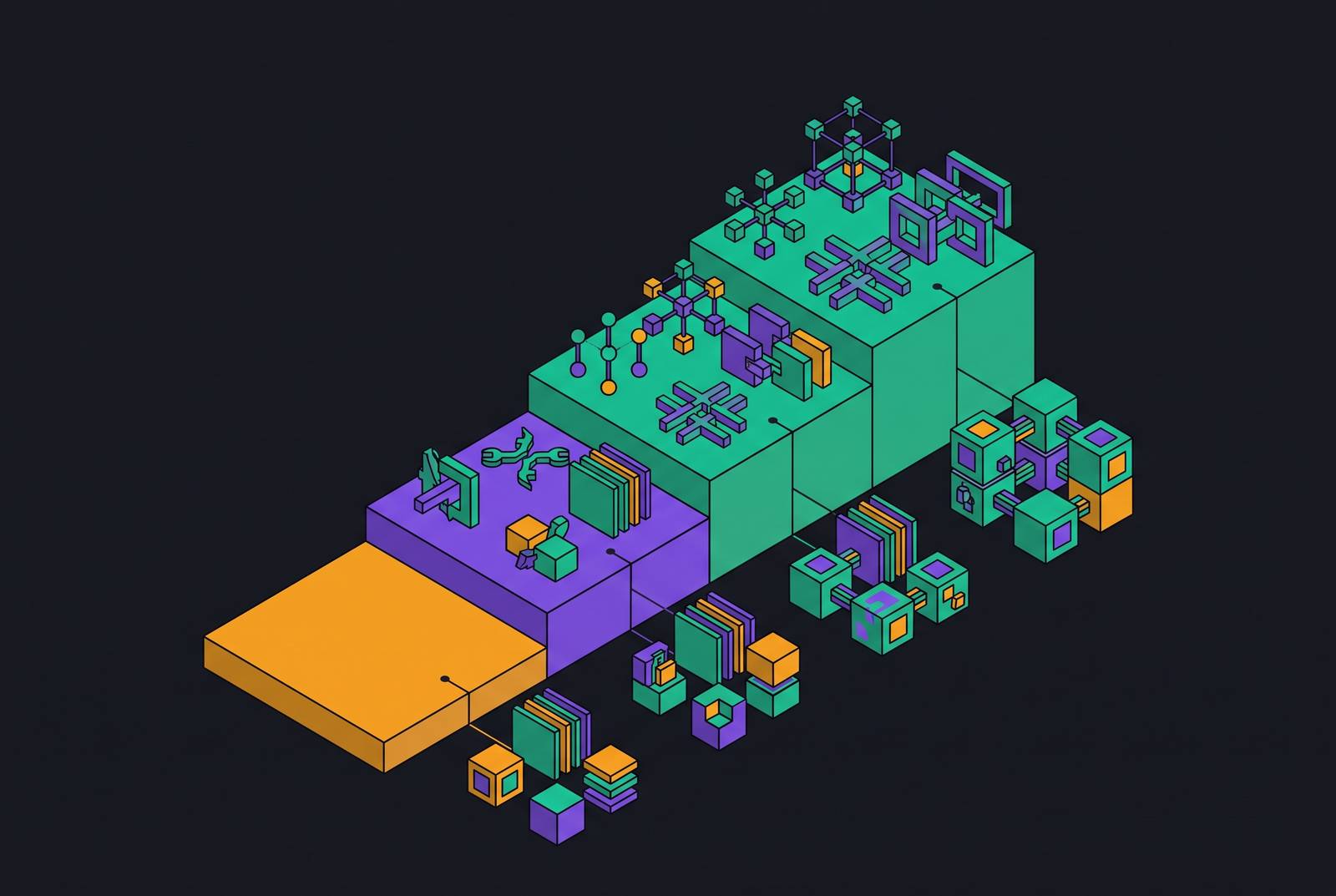
How well Claude Code works depends on the engineering task as well as prompting skill. Teams can hand off all mechanical work, but feature work needs a clear specification, and complex engineering needs planning and context management. This task map helps teams choose what to hand off, while isolated cloud environments let agents run and check their work so teams can rely on them.
Why Claude Code's effectiveness varies by task type, not just user skill
Mismatched expectations turn agent adoption into guesswork. Teams hand off work out of enthusiasm or habit, then take the result as proof that Claude Code can do most things well or has limits that hold it back across tasks. Both conclusions obscure the task itself. Supervising routine documentation consumes attention that could go toward design, while assigning ambiguous engineering work without sufficient framing leaves the agent without the decisions it needs.
Claude Code makes that distinction consequential because it operates beyond autocomplete. It can inspect repositories, reason across multiple files, execute terminal commands, debug errors, and refactor systems. Those capabilities expand what an engineer can delegate, but they do not remove the need to understand software design and repository structure. Engineering judgment remains part of the workflow. The engineers seeing the largest gains typically have that foundation already. Better prompting alone does not ensure that engineers match tasks to the agent’s capabilities.
How Claude Code's skills system creates a structured capability surface
Claude Code’s skills system packages reusable workflows in SKILL.md files. Instead of asking each engineer to reconstruct a procedure in every prompt, a team can define it once and make it available to the agent. The full instructions load only when a task matches the skill’s description, which is how progressive disclosure works. This keeps the initial context lean. A team can therefore install a broad library without loading every procedure at the start of every session.
The trigger text controls whether the agent gets that procedure when it needs it. The combined description and when_to_use text is truncated at 1,536 characters in the skill listing, so the wording at the top of the file influences activation. Location determines which version takes precedence. Skills can live at enterprise-managed, personal, project-level, and subdirectory scopes, with enterprise taking precedence over personal and personal over project when names collide.
Frontmatter controls both how a skill runs and how it is discovered. Setting disable-model-invocation to true makes a skill manual-only, invoked by an engineer through /name, which is useful for deployments or other actions with side effects. The allowed-tools field pre-approves specific tools for the turn in which the skill runs. These controls make invocation and tool permissions explicit. The Agent Skills spec, released December 18, 2025, made SKILL.md an open standard, with the same folder format usable across Claude Code, Cursor, OpenAI Codex, and other harnesses. A delegation framework can therefore rest on one library across agent interfaces.
Mechanical tasks: what Claude Code handles without engineer involvement
Mechanical tasks are frequent, consistent in format, and low in cognitive value. At this tier, the appropriate posture is full delegation. The pr-description-writer skill reads a branch diff against its base and produces a PR body explaining what changed, why, how it was implemented, and what reviewers should test. It supports GitHub, GitLab, and Bitbucket formatting. Agensi offers the skill free, providing a concrete replacement for empty descriptions or “fixes stuff” summaries that leave reviewers to reconstruct intent.
The readme-generator skill scans a repository and produces installation, usage, and configuration blocks, while changelog-generator turns a commit range into a semver CHANGELOG entry. Both are free on Agensi. Their inputs and outputs are well bounded. That makes agent throughput more valuable than manual production without a meaningful quality tradeoff for this class of work.
The economic case is strongest where repetition dominates judgment. Writing a familiar document from existing repository evidence is different from deciding what a feature should do or how a system should change. The task boundary is already largely defined. Once the work requires choices that the repository does not settle, delegation needs more than a standard output format.
Feature-level tasks: where task specifics, not just tier, determine how much Claude steers itself
Claude Code handles greenfield scaffolding and single-file work reliably, but a vague request leaves more unresolved than it does at the mechanical tier. A new API endpoint or landing page needs a defined target, while test generation benefits from functions with explicit inputs and outputs. The specification becomes the steering mechanism. The engineer establishes what success means before the agent starts implementing it.
The codex-grade-coding skill applies production standards, including validation, error handling, and tests, to generated code, while lint fixes and style enforcement provide comparatively bounded work. Environment debugging needs a diagnostic sequence instead. The env-doctor skill checks runtime versions, missing dependencies, environment variables, database connections, and port conflicts in a logical order. These tasks share a tier, but not a workflow.
The truth-first skill, which is free on Agensi, makes the agent run the code before it can claim success. This addresses an important gap between producing changes and validating them. The code-reviewer skill adds structured review of recent changes for security vulnerabilities, logic errors, edge cases, performance issues, and style violations, organized by severity.
Versionable, shareable skills put the procedure in the repository. The superpowers collection establishes a plan-before-code, test-before-claiming-done methodology. This changes the shared workflow as well as individual output. At the feature tier, the engineer supplies the task-specific contract while the skill library supplies the common method.
Complex engineering tasks: multi-file reasoning, cross-codebase debugging, and architecture work
For complex engineering, context management has the biggest effect on cost and the quality of the work. Cross-codebase debugging, multi-file refactoring, and architecture work need the agent to keep track of what it finds and link its decisions over a long session. Claude Code’s investment in context and planning is most useful here. Yet a longer session also accumulates more material that must remain relevant and usable. To work in depth, the agent needs that growing context kept in order as it works.
The same superpowers methodology extends into brainstorming, planning, test-driven development, systematic debugging, sub-agent-driven development, and git worktree workflows. Its value at this tier is a common planning discipline across the team. Context efficiency requires an additional mechanism. The lean-ctx context runtime and skill have session caching, code-structure-aware compression, and more than 90 shell patterns that help the agent use fewer tokens. It supports Claude Code, Cursor, Copilot, and 30+ other agents, with Claude Code installation through lean-ctx init --agent claude.
Unmanaged context raises both cost and error rate on complex tasks. For cost-efficient delegation at this tier, lean-ctx is a prerequisite. Keeping the state of a plan takes more than compression alone. The planning-with-files skill from OthmanAdi/planning-with-files keeps plans, findings, and progress in project markdown files and re-injects them every turn. When context is cleared or compacted, that persistent record lets the task resume at the right phase.
The autonomous rulecheck pattern shows how these concerns fit into a complete workflow. An agent scans for CLAUDE.md rule violations, fixes them in an isolated worktree, validates the changes, creates a PR, and notifies Slack, while persistent memory supports improvement across runs. Its frontmatter assigns isolation the value worktree, memory the value project, and permissionMode the value acceptEdits, with a maxTurns safety cap. For this to work reliably, the agent needs to keep its task state and run in an execution environment that keeps its work apart from other activity.
Why the environment the agent runs in matters as much as the skill it uses
Claude Code’s agentic loop needs an environment that supports the work its skills prescribe. Choosing tools and accumulating file and command output are insufficient if the agent cannot install packages, run services, drive a browser, or verify its changes. Execution is part of the capability. For a skill that requires validation to finish work reliably, the environment must let that validation run.
Governance therefore operates at several layers. Permission modes and checkpoints determine which actions the agent can take autonomously, while a hook can deny or defer an action before execution. A sandbox can block a subprocess at the operating-system level even when the model decides to run it. These controls do different jobs.
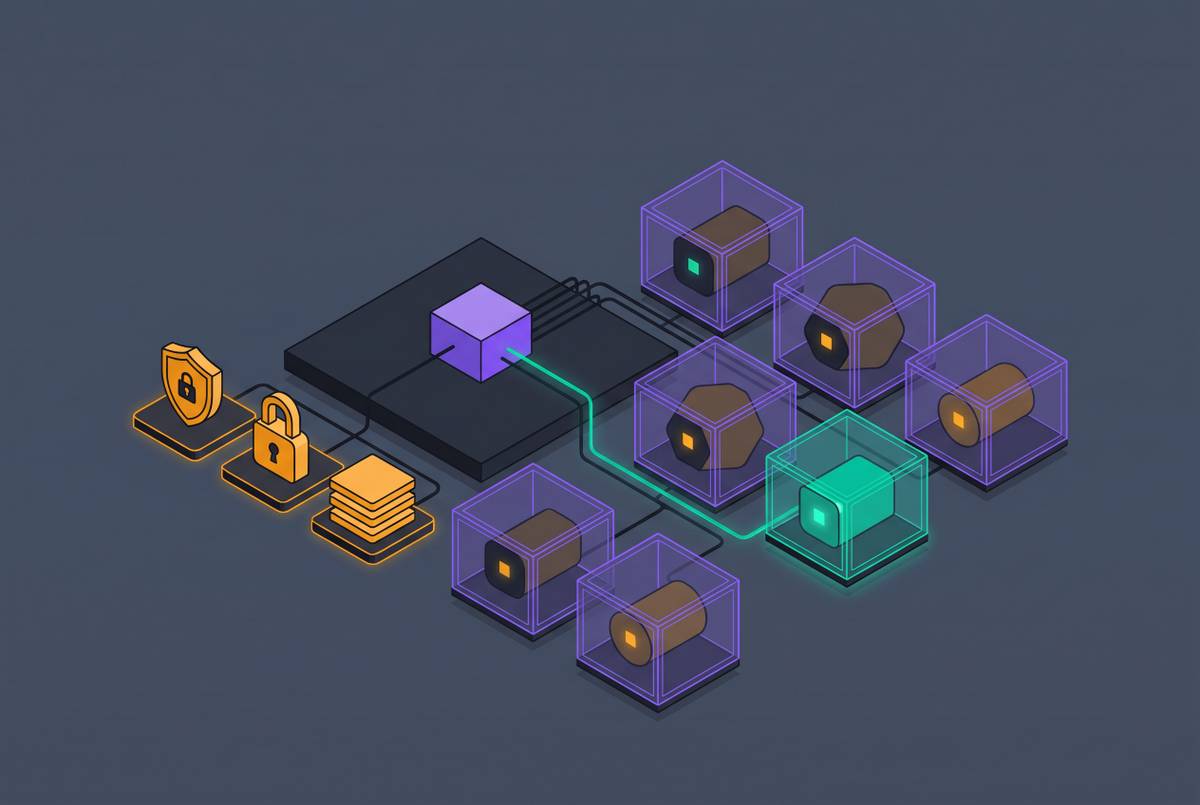
Isolation also protects the predictability of the task map. The rulecheck pattern gives the agent its own git worktree so its edits remain separate from the main branch. Shared environments add risk when sessions clash over state, package versions, or file systems. A previously successful procedure can then fail in contention. Cloud environments that preload team dependencies and tooling into isolated computing environments make delegation practical at team scale by giving each agent the facilities needed to execute and verify its work.
Observability exposes failures that isolation alone cannot prevent. The Langfuse Observability Plugin traces prompts, turns, model generations, tool calls, token usage, and cost without code changes. Its tracing covers Claude CLI sessions and the desktop app in Code mode, but not Claude Desktop Chat mode. Evidence from each session shows which tasks go over budget or fail silently, so teams can use what they learn about infrastructure reliability to choose what to hand off next.
Building a team-wide delegation model from the task-tier framework
A shared delegation model requires shared procedures. A phased pilot gives teams a stronger adoption path than deployment to everyone on day one, while structured onboarding, a skill library, and workshop sessions shorten the proficiency ramp. The rollout needs a consistent method. Teams should select one methodology collection, such as superpowers or an equivalent, rather than give the agent competing rules about when to plan and test.
That method belongs in the repository. Project-level skills in .claude/skills/ become git-shared when committed and pushed, so engineers can follow the same procedure and track its versions. Portability protects that investment. The same format works across Claude Code, Cursor, OpenAI Codex, and OpenCode, which also supports local models through Ollama for work that cannot leave the machine. With a harness-agnostic library, the team can try another agent and keep using the procedures it has already built.
Knowing which skills activate, for which tasks and engineers, and at what token cost gives the team evidence for refining its delegation boundaries. Estimates and actual spend serve different purposes. Anthropic’s official claude-api skill in the anthropics/skills repository supplies pricing and token-counting information for estimation, while session observability records actual usage. Comparing those signals helps distinguish a poorly framed task from an expensive workflow.
New-hire performance provides a concrete early signal of whether this shared knowledge is useful. Teams with a maintained skill library and onboarding workflow see meaningful reductions in time-to-first-meaningful-PR because the agent can access institutional procedures from day one. That outcome complements token and session data. Together, they show whether the framework makes engineering work easier or just keeps agents busier, and help teams improve the task map over time.