Opencode as a Harness Alternative to Claude Code
Opencode swaps models freely; Claude Code locks them in tight.
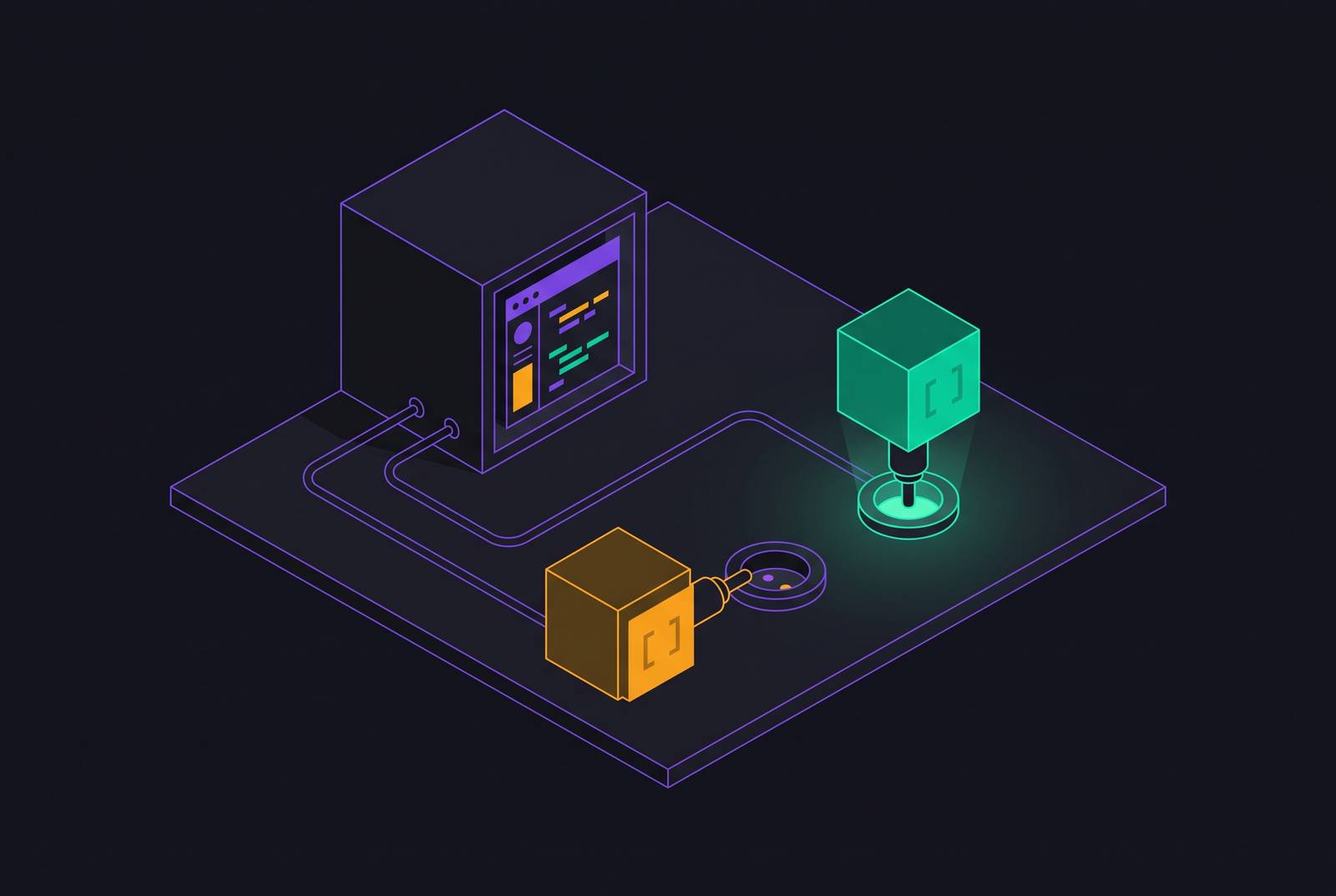
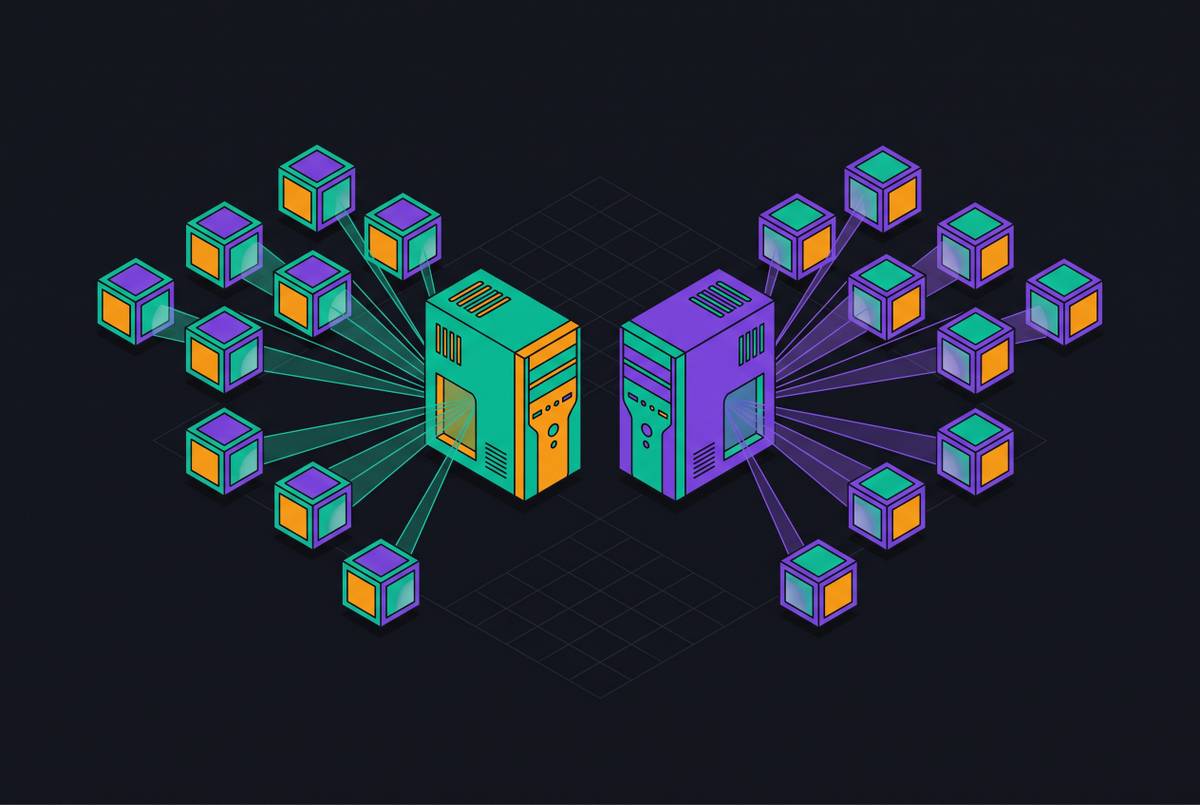
Choosing between Opencode and Claude Code is a choice between two architectures, not a feature comparison. One treats the model as a swappable runtime argument; the other treats model and harness as a single integrated product, engineered and shipped together. A coding harness is the scaffolding that surrounds a model: the loop that reads files, calls tools, runs shell commands, and feeds results back so the model can take its next step. The model reasons, and the harness drives. Because harness and model are technically separable, a harness can be built to lock them together by design or to hold them apart by design, and that single decision shapes everything that follows: Claude Code locks them together, with the harness built around and optimized for Anthropic's own model family, so its reasoning quality, context behavior, and agent discipline are all products of that tight coupling. Teams picking Claude Code are picking a product. Teams picking Opencode are picking an operating model, and every tradeoff examined in this piece traces back to that split.
Opencode and Claude Code, stripped of marketing
The two tools come from different origins, carry different governance structures, and operate under different licensing terms, and those structural facts set the boundaries for what a team can and cannot do with each one.
Opencode has crossed 210,000+ GitHub stars, so it is the most widely cited open-source terminal coding agent in active use. It ships under the MIT license. The codebase can be forked outright if the project's direction changes or a provider relationship breaks down. Its development happens in the open, governed by community contribution and shaped by a roadmap that reflects that process.
Claude Code is Anthropic's official terminal agent: first-party, closed-source, with the harness and the Anthropic model family developed in tandem. It runs on Claude Opus 5.5, Sonnet 5.5, Haiku 5.5, Fable 5.1, Opus 5, Sonnet 5, and Fable 5 as its model options. Pricing runs pay-per-token through the Anthropic API, or bundled into a Claude Pro, Max, Team, or Enterprise subscription. Both tools are mature, well-documented pieces of engineering with distinct lineages, and neither is a stripped-down version of the other.
Where model flexibility constrains you
Model-agnostic design gives Opencode a capability ceiling that moves when the model landscape itself moves, but that flexibility comes with operational costs you never have to think about if you use Claude Code.
Opencode connects to 75+ providers through models.dev. The cost structure follows directly from this: engineers pay only for model API usage, and with local Ollama models there is no token cost. Opencode itself is not benchmarked on any standard coding or terminal-task benchmark, because it is a harness rather than a model, so its effective score is always the score of whatever model happens to be loaded. That is simultaneously the source of its strength and the source of its accountability gap: a team cannot point to a single number and say "this is what Opencode scores."
Claude Code's case rests on the opposite logic. One model scores a documented figure on a standard coding benchmark, a result tied directly to the specific model this harness runs, so engineers choosing Claude Code know precisely what model performance they are buying. The tradeoff cuts the other way, though: when a better model ships from a different provider, Claude Code users have no path to route to it, while Opencode users do.
Flexibility has a cost side that is easy to underestimate. Opencode's Go plan costs $10 a month and gives you a curated, low-cost model lineup rather than full frontier access, so if you need frontier models, you turn to Zen pay-as-you-go pricing or bring your own API key instead. The strongest objection to full flexibility is organizational rather than technical: without a default model, teams must establish and maintain their own model selection policy, while Claude Code answers the question "which model should I use?" before the team ever has to ask it.
This split between harness and model, and the choice to couple or decouple them, maps directly onto how cloud platforms support multiple coding agents. Replicas, for instance, runs any harness, including Claude Code, Opencode, Cursor, and Codex, inside its own isolated VM, which keeps the platform itself agnostic to that harness-model relationship and lets teams swap agents and models without changing how the agent runs or how it gets triggered from Slack, Linear, or GitHub.
Agent architecture: how each tool structures the work it does on your behalf
Opencode's dual-agent architecture and LSP integration give it a structural advantage on complex, multi-step tasks, but Claude Code's tighter sandbox and more disciplined execution model matter more when the cost of a bad tool call is high.
Opencode runs a plan agent and a build agent, switchable with the Tab key. Build mode executes. This separation is built into the architecture itself. Opencode also supports MCP (Model Context Protocol) for extensible toolchains and custom tools, and multiple sessions can run in parallel on the same project.
Claude Code operates as a native shell tool: it executes commands, manages files, reads and writes across repositories, interacts with Git, and chains operations together. Rather than running inside a sandbox, Claude Code asks before destructive operations, keeping a human in the loop by default on dangerous calls.
Sandboxing is where the two tools diverge most sharply. Claude Code sits between the two approaches: it prompts before destructive operations but does not run commands inside a fully isolated OS sandbox. For unattended or auto-approved runs, Opencode's permission-prompt model demands more trust in the model's behavior, and for teams running agents in shared or production-adjacent environments, environment-level sandboxing becomes a meaningful differentiator. A cloud agent environment that runs each session in its own isolated VM, like Replicas, closes a gap that permission prompts alone cannot: the sandbox becomes the environment itself.
Memory and context: how each harness handles what the agent already knows
Opencode's stateless-by-default sessions are its most significant structural gap relative to Claude Code, but the community has built workable solutions around that gap, requiring deliberate setup to reach.
Every Opencode session starts cold by default. Claude Code uses a file-backed bridge where memory serializes into MEMORY.md with periodic syncs, while Opencode injects memory directly into the system prompt at session start, current when it exists but only as current as whatever was last written into the instruction files.
The Opencode community has addressed the gap with context compaction that happens proactively: at 80% context usage, configurable by the user, the plugin generates a summary while the model still has breathing room, preserving the literal request, the end goal, files touched, tests added, commits made, work remaining, and negative constraints, then pushes that summary into memory under a project-scoped tag so the session can continue. You can add a channel ID and user ID in multi-user setups to create fully isolated memory banks per developer per project, a community pattern requiring manual setup.
If you are a solo engineer, Claude Code's memory model works out of the box. Opencode's requires installing and configuring a plugin before it reaches comparable usefulness. Neither tool's native memory system is built for shared organizational context at scale; that problem sits above the harness layer, in the environment and orchestration infrastructure a team chooses to run on top of it.
Workflow integration: how each tool fits into existing engineering processes
Opencode's community-built integration ecosystem is broader than most engineers expect, but if you want it to work at team scale you need deliberate orchestration, and Claude Code's narrower but more uniform ecosystem handles that more consistently by default.
Lola Ojabowale built "Pipa," an autonomous Opencode agent living inside Slack, where Slack threads become workspaces and multiple tasks run in parallel without a terminal session. Claude Code's GitHub integration runs through much of that same community and third-party layer, but its sub-agent and slash command system makes it easier for you to standardize PR-level workflows internally.
Ramp built an internal agent called Inspect using Opencode as its harness, running agents in snapshot-based Modal Sandboxes with OpenCode SDK extensions, a named example of a production engineering team choosing Opencode specifically for its harness flexibility. If you want agents wired into Linear and Slack today without building custom tooling, both tools still need some assembly. Whether you get that assembly layer community-maintained, as with Opencode, or vendor-supported within Anthropic's own ecosystem, as with Claude Code, is the real difference. Teams that want these integrations without building them themselves can run agents through a platform like Replicas instead, which ships Slack, Linear, GitHub, and GitLab triggers first-party regardless of which harness sits underneath.
Running these agents at team scale: environments, orchestration, and attribution
At team scale, the choice of harness becomes secondary to the environment and orchestration layer sitting on top of it: who owns the compute, how sessions stay isolated from each other, and whether every agent run can be attributed to a specific source are questions neither Opencode nor Claude Code answers on its own.
Team-scale use demands several things neither tool provides natively: multiple agents running in parallel on different issues without interfering with each other or the shared codebase, consistent dependency and tooling configuration across every session rather than whatever state happens to exist on a developer's local machine, attribution that ties a given agent run, model, and credential to a specific output so a team can measure what actually shipped and what it cost, and background execution that returns a pull request rather than requiring an engineer to sit and watch a terminal.
The Opencode community has built real infrastructure toward this. The OpenCode Ensemble project coordinates parallel Opencode agents with peer messaging, a shared task board, git worktree isolation, and a live dashboard. One documented multi-agent permission model assigns a dedicated @test agent to write test files only, enforced through file pattern matching and a post-step file gate in the orchestrator, while a separate @pm agent uses the cheapest available model for structured data operations with bash access sandboxed to a specific set of CLI commands. These patterns work, but they are community-assembled, and setting them up and keeping them running takes real engineering effort.
Both Opencode and Claude Code remain, at their core, terminal tools designed to run on an engineer's local machine. Neither ships the isolated, pre-configured compute environment you need for reliable team-scale agent work. Ramp's Inspect pattern, with pre-warmed containers and Opencode SDK extensions, solves this problem, but it requires infrastructure engineering at Ramp's scale to build and operate.
Replicas runs coding agents, including Opencode, Claude Code, Codex, and Cursor, inside isolated, fully configured Linux VMs, where each agent run gets its own environment pre-loaded with the team's dependencies and tooling, so agents can install packages, run services, drive a browser, and verify their own work without touching shared infrastructure. Full analytics give teams attribution down to the source, harness, model, and credential for every minute an agent runs, turning agent work into something measurable. That infrastructure means a team is not forced to choose between Opencode's model flexibility and Claude Code's tighter integration: either harness, or both, can run through the same platform with consistent isolation, workflow integration, and attribution, regardless of which agent is actually doing the work.
Choosing between Opencode and Claude Code for your team's situation
The right choice between Opencode and Claude Code depends on which constraint binds hardest for a given team: model flexibility, vendor independence, reasoning quality for a known task profile, or how ready the team's infrastructure is to support either tool at scale.
Opencode fits a team that runs different models for different task types, Claude for reasoning, GPT for generation, local models for sensitive code, and wants one harness that accommodates all of them without separate tooling per provider. It fits where cost structure matters directly: paying only for model API usage, with the option to run local models at zero token cost, makes the economics predictable in a way a flat subscription cannot. It fits a team with the infrastructure and engineering appetite to configure persistent memory, set up CI/CD integration through GitHub Actions, and maintain the community-built orchestration patterns described above, or one running through a platform like Replicas that absorbs that layer for them.
Claude Code fits a team whose primary workload is complex, multi-file reasoning where Claude's specific training and the tight harness-model coupling produce consistently better results than any model-agnostic alternative the team has actually tested. It fits your team if you want minimal configuration, because Claude Code's memory model, CLAUDE.md instruction system, and sub-agent ecosystem work without you installing a plugin first. It fits a team that has standardized on Anthropic's model family with no near-term reason to route elsewhere.
There is a point at which the harness choice itself stops being the binding constraint. A team moving from individual agent use to team-wide delegation, assigning issues from Linear, triggering runs from Slack, expecting pull requests back without watching a terminal, finds that the environment and orchestration layer matters more than which harness is selected underneath it. Staying harness-agnostic, Opencode's core value, and running in isolated, pre-configured environments, which neither harness provides natively, turn out to be compatible goals. Replicas lets a team run Opencode, Claude Code, Codex, or Cursor through the same workflow integration and attribution infrastructure. The harness decision becomes a task-by-task optimization rather than a single architectural commitment a team has to live with indefinitely.