What BYOA Means for Engineering Teams Running Cloud Agents
Infrastructure flexibility lets teams swap agents without rebuilding their platform.
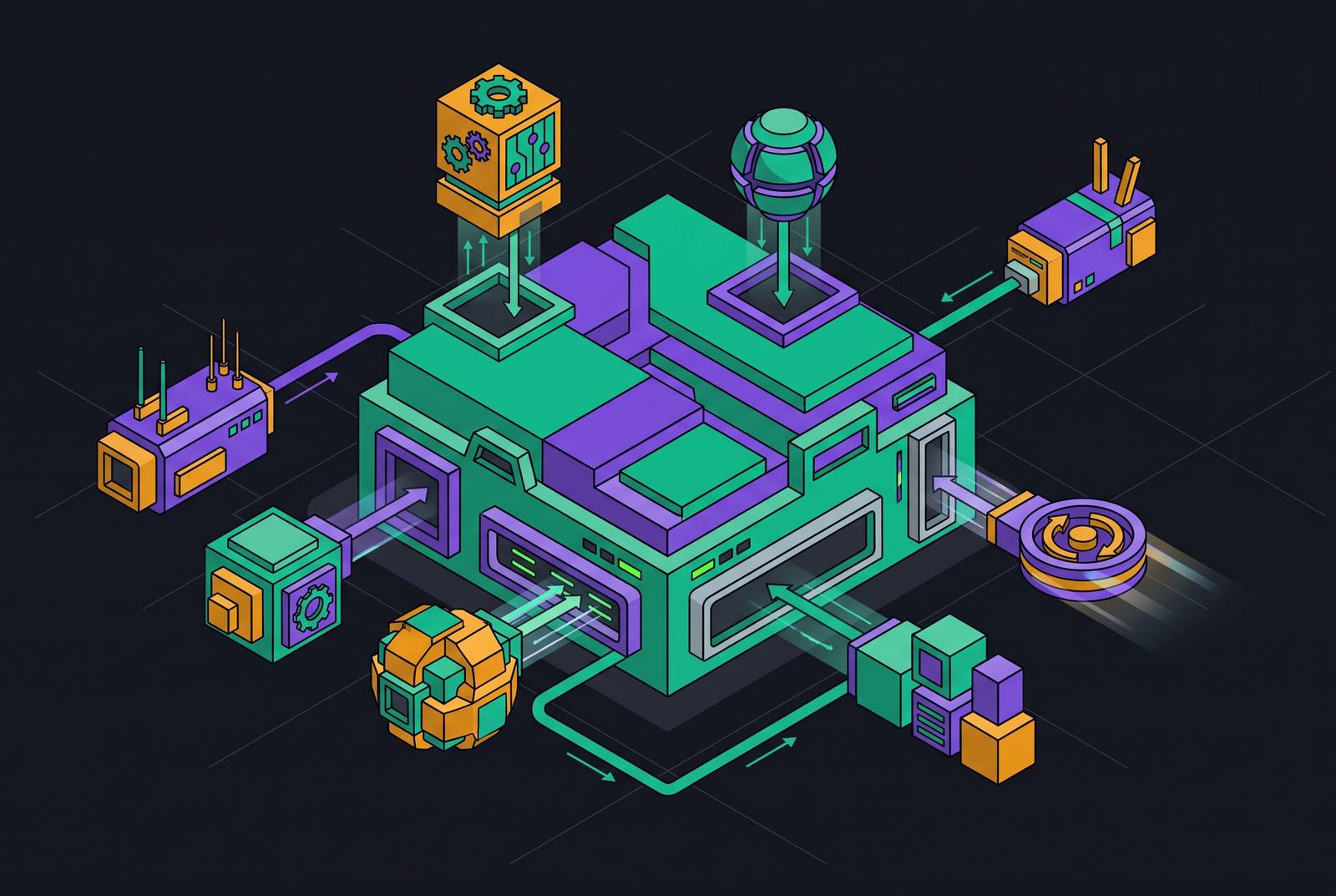
A bring-your-own API key cloud coding agent runner needs more than a place to store an API key from OpenAI or another model provider. It needs a shared execution environment that gives the chosen agent consistent sandboxing, credential routing, observability, and workflow access. For engineering teams, bring your own agent, or BYOA, delivers flexibility only when switching agents does not mean rebuilding that infrastructure.
Why BYOA has become an infrastructure question for engineering teams
BYOA here means a coding agent, external or built in-house, that runs inside a shared platform and has the same routing, monitoring, and audit access as a native agent. Plain’s BYOA definition distinguishes at least three uses of the term, so the execution-environment boundary matters. Choosing a model or connecting an external service does not, by itself, meet this definition. The architectural commitment is that the platform accepts responsibility for how every agent operates, rather than leaving each agent to supply its own operating rules.
Zowie’s BYOA framework makes that distinction concrete. An external agent that can connect but lacks monitoring or tracing is a helpdesk integration. Applied to coding agents, that test separates a supported participant from a tool that merely receives requests. A connection endpoint proves that work can enter the agent. It does not prove that the resulting work can be governed through the platform.
That difference matters because engineering teams have reasons to use more than one agent. Repository work, documentation sync, and sensitive systems can call for a coding specialist, a different model, and a privately hosted agent respectively. No single vendor covers all three optimally. If those choices each need their own operating environment, the team pays for agent choice with more systems to run. Those agents therefore need to belong to one manageable system.
How the model landscape made harness flexibility a survival requirement
The pace of change makes that architectural choice harder to defer. As of mid-2026, Claude Code, Codex, Cursor, and Opencode each hold meaningful share among professional developers, with no single tool dominating every use case or organization size. A platform tied to one harness can fall behind within months. The cost is not simply missing one alternative at the time of purchase. Each subsequent change in the field creates another reason to revisit the original constraint.
Opencode illustrates why that pressure extends beyond the major technology companies. Anomaly Innovations, an accelerator-backed startup, built it into a tool with meaningful global developer mindshare. Community-sourced harnesses can therefore become team defaults faster than procurement cycles can track. Choosing infrastructure on the assumption that the set of agents worth using is settled also bets on how the market will develop.
Android Studio’s September 2026 BYOA release shows how platforms are responding. Its canary release introduced Claude Agent, Codex, and Google Antigravity, with additional agents accessible through a registry. Android Studio is designed to let teams switch agents when one runs out of quota or falls short of the performance they expect. The platform preserves the working environment while the agent changes.
With the opposite architecture, each such change costs more. Zowie’s BYOA framework describes closed platforms where agents have to use the platform’s tools, models, and infrastructure. Under that arrangement, even an internal agent that performs better for a particular workflow cannot participate. Lock-in grows because the team’s routing and the work of running its agents stay tied to a choice that changes in the market keep calling into question.
What "first-class participant" actually requires to run Claude Code or Codex in the cloud
Running Claude Code or Codex in the cloud without managing the infrastructure means delegating more than compute provisioning. The platform must supply the execution and control functions that would otherwise sit around the agent. Plain’s BYOA requirements call for each agent to have a distinct machine identity, get event access through webhooks rather than polling, and have write access through the same API native agents use, with the platform in charge of routing and handoff logic. Keeping those functions outside the harness is the important separation. If they live inside it, replacing the agent also means replacing part of the platform.
Zowie’s framework adds the quality requirements to that interface. External agents must use the same orchestration layer, quality systems, audit trails, and channel infrastructure as native agents. For coding work, those controls cover an environment that needs to do more to run code than a conversational agent needs. State must last across sessions, and isolation must treat the code an agent generates as untrusted. Agents also need to install packages, run services, drive a browser, and verify their work.
Android Studio’s Agent Client Protocol (ACP) implementation illustrates one way for the environment to carry more of that burden. The IDE supplies the full project graph, build setup, and platform details to the agent, which can filter to relevant files for efficient token usage. The environment supplies project context, sparing each harness from having to reconstruct it.
Replicas applies the shared-environment pattern to cloud execution. It supports Claude Code, Codex, Cursor, and Opencode, with each task running in its own isolated Linux VM pre-loaded with the team’s codebase, dependencies, and tooling. Each harness uses identical sandboxing, observability, and routing primitives, so installing packages, running services, and verifying work do not require a separate operating model for each agent. This makes the environment, rather than the harness, the stable foundation.
Why observability across agents is the capability that actually determines team-wide trust
A common environment becomes useful for team decisions only when its measurements are common too. Engineering leaders need to attribute output to a specific agent, model, and task before they can decide which agents to keep running. Otherwise, BYOA offers choice without a reliable basis for exercising it. An agent’s work must meet the same quality criteria as the alternatives and create a manageable review load.
Zowie’s BYOA framework identifies the failure on the other side of that boundary. Agents outside the platform cannot be checked against the same quality criteria, share conversation context, or use the same orchestration layer. Teams then depend on complaints to learn of problems. Developer trust in AI accuracy has also dropped year-over-year even as adoption has risen. That tension makes consistent evidence more useful than either general enthusiasm or general skepticism.
The evidence needs to follow the work to its reviewable output. Task-level attribution connects the harness, model, and credential to the task and the resulting PR. Without that chain, a team cannot tell which agent makes high-quality changes and which leaves it with review debt. Session-level visibility is too coarse for this purpose because the decision concerns the work a particular run produced.
For example, the analytics in Replicas attribute every minute of agent execution to the source, harness, model, and credential. The run is the unit of accountability. That gives agent selection a shared measurement basis. An extra harness without access to that same observability layer, credential routing, and quality system gives the team another choice on paper but leaves it unable to see how that harness works.
How workflow integration determines whether agents operate as team infrastructure or individual experiments
An agent confined to a dedicated interface still depends on someone moving tasks and results across the boundary. Team infrastructure instead accepts work where it originates and returns output where review happens. For engineering teams, those places include issue trackers, version control and CI, and communication tools. Their role is not simply to make an agent easier to launch, but to close the loop between a request and its outcome.
GitHub Copilot’s Linear integration demonstrates that loop. An assigned issue supplies the description, the agent analyzes it and opens a draft PR, and updates stream to the Linear activity timeline in real time. The agent requests review when the work is ready. Copilot’s Slack integration, available through the GitHub app, follows the same pattern by accepting a mention in a thread and replying when the PR is ready.
Linear reports using its own agent workflow internally to resolve a significant share of incoming bug reports, mostly on the first pass. The important mechanism is the issue-to-agent-to-PR path, which does not require a human routing decision at every step. Visible progress and a returned review artifact make the agent’s activity part of the existing workflow. The team does not need a separate destination merely to discover what happened.
Peer adoption gives that visibility further weight. A 2026 study found 216% higher odds of trying Copilot CLI when more than a quarter of skip-level peers were already using it. Work visible in Slack and Linear can be seen by teammates in a way that activity confined to a personal IDE cannot. With triggers from Slack, Linear, GitHub, GitLab, and Sentry, Replicas follows the workflow-native pattern by returning pull requests or replies. The engineer stays in the tool where the work began.
The governance gap that appears when BYOA is treated as a feature rather than an infrastructure policy
The strongest objection to agent flexibility is that unrestricted choice can reproduce shadow IT. Agents may have real access to enterprise systems and inherited credentials, with no lifecycle policy to say when that access ends. The stakes are higher than with static scripts because agents self-direct. A platform that advertises external-agent support but leaves that access unchecked has changed what can connect without setting limits on what it can do. This is a design gap.
Passing human passwords, API keys, OAuth tokens, or session cookies directly to an agent creates an unmanaged service identity whose privileges can outlast the task. Installation by a person should not grant the agent that person’s full access. The appropriate pattern is a distinct machine identity with narrowly scoped credentials tied to the work. A coding assistant that needs a development repository should not receive unrestricted access to production infrastructure.
That boundary must survive delegation as well. When an agent invokes a tool that calls another service, or delegates to a subagent, each step should preserve identity, authorization context, and an auditable record. Otherwise, a poorly configured component can exercise another system’s authority without accountability. Per-run attribution and sandboxing belong in the same control model because the team needs to know both what executed and whose authority it used.
Android Studio’s granular permission model illustrates enforcement by the environment. Agents can act autonomously on routine work while pausing for human approval on riskier actions. The boundary does not depend on the agent deciding for itself when its access is excessive. Governed BYOA therefore lets different harnesses work within the same limits instead of relying on restrictions on harness choice to do the job of those limits.
What harness-agnostic cloud agent infrastructure looks like when it is working
The IDE supports real-time collaboration, the CLI supports local execution, and cloud agents support asynchronous delegation. BYOA infrastructure is the operating model for that third layer. Its natural workload is bounded, testable, reviewable work that takes time, including adding tests, upgrading dependencies, fixing lint errors, mechanical refactors, documentation sync, and small bugs. A PR is the appropriate output because the work can be reviewed before it becomes part of the codebase.
Teams then give agents more trust in stages, starting with less than full autonomy. Agents start by adding tests and fixing small bugs, then take on low-risk refactors. They next take on dependency updates and documentation sync, before moving to cross-module feature work. The infrastructure must support that progression without requiring a new execution arrangement at each stage. Greater responsibility changes what the agent is allowed to do while its activity remains visible and attributable.
Cloudflare’s internal OpenCode workflow uses a shared profile so the agent does not re-ask questions a teammate has already answered. That is a concrete example of cloud infrastructure carrying learning across people and sessions rather than leaving it confined to local environments. Context becomes something the team can retain as agents take on new work.
For a build-or-buy decision, this produces a practical test. The team should be able to switch the coding agent and keep its routing, observability, and workflow connections. A new harness should enter the existing environment with its controls and measurement system intact. If switching requires rebuilding those connections, the team has a collection of integrations. When a better agent becomes available, rebuilding will stand between the team and adoption.