Sandboxed Harness Platforms Ranked by How Teams Assign Cursor and Codex Without Owning the Infrastructure
Cursor and Codex lead agent assignment.
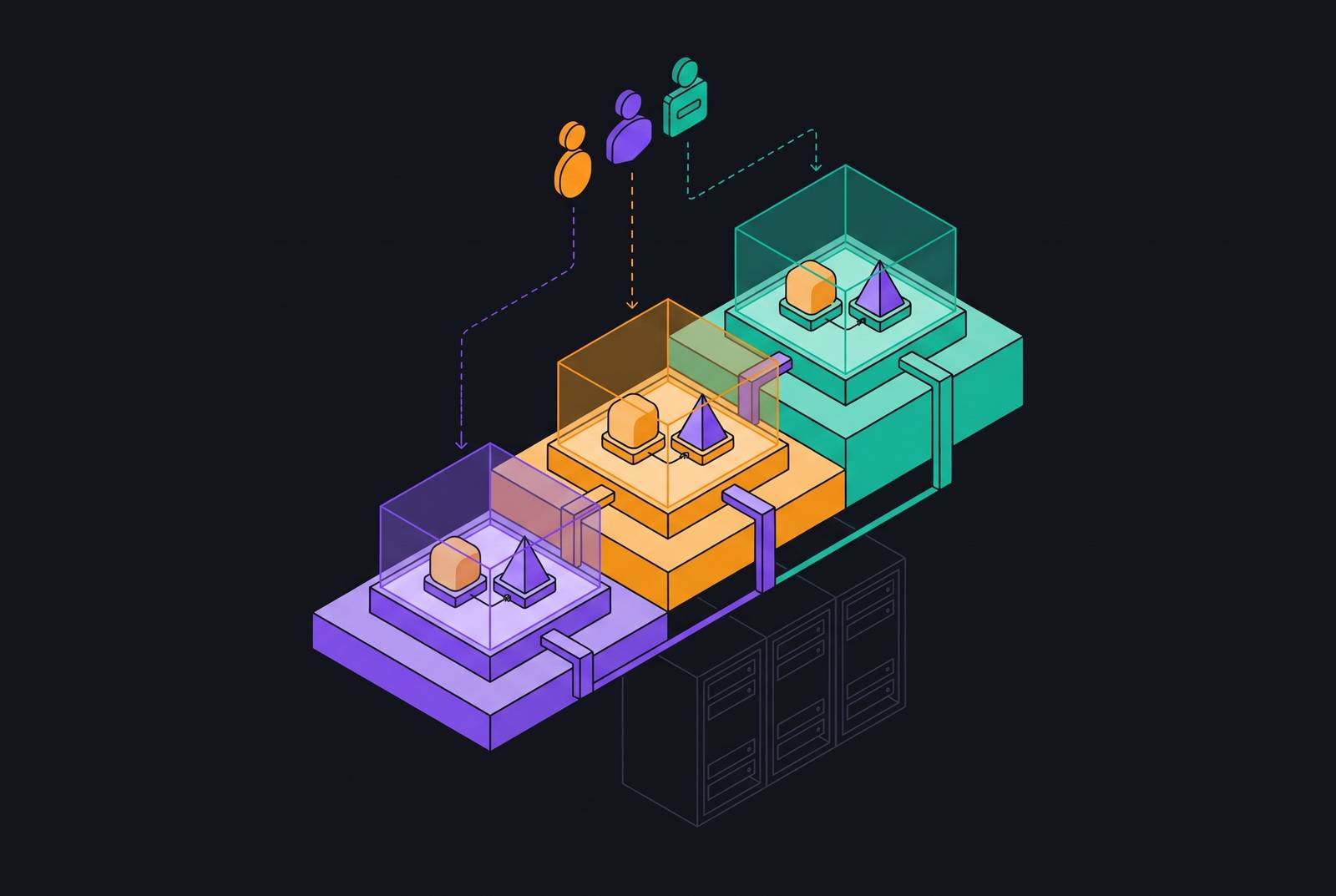
The best cloud coding agents for engineering teams depend on how work is assigned and verified as well as sandbox speed. Cursor leads for teams centered on its IDE, while Codex offers parallel cloud tasks with clean PR output. Northflank, Daytona, and Fly.io Sprites provide more control over task environments, but require a workflow layer. This ranking compares those delegation models and the work each leaves to the team.
Why the standard sandbox comparison misses what engineering teams actually need
Sandbox marketing emphasizes isolation depth and cold-start speed. Can an engineer assign a Codex task from Slack and receive a PR without managing compute? Isolation and concurrency influence that experience, but neither explains how an assignment reaches the agent or whether its output is ready for review.
The 2026 landscape splits into agent-native sandboxes and infrastructure platforms. Codex and Cursor isolate tasks for safety, while infrastructure platforms offer governed, full-stack environments for verification. That distinction changes the comparison. Most agent-native sandboxes can run unit tests, but they cannot deploy against real services, reach real databases, or give back a working preview URL.
The delegation workflow as the right ranking axis
Delegation workflow begins with four concrete questions. Where can the team trigger a task? An assignment from a Linear issue or Slack thread fits a different working rhythm from one initiated inside a vendor IDE. The trigger determines who can delegate without changing tools. A platform that works well for an individual developer may therefore introduce friction when assignment becomes a team practice.
The second question concerns the environment the agent receives. Can it install the repository’s dependencies, run services, drive a browser, and reach the infrastructure its task needs? Teams also need to establish what the agent can verify before returning. Executing code is not equivalent to testing a change against working services, so environment fidelity and verification must be assessed separately.
A PR goes straight into the team’s review and merge process, while a recording, reply, or diff takes another step. This is the output contract. Together, trigger, environment, verification, and output measure delegation completeness.
How Codex's agent-native sandbox handles delegation and where it stops
Codex runs parallel coding tasks in isolated sandboxes on OpenAI-hosted infrastructure. The team provisions no compute for those cloud tasks. Its access surfaces include the CLI, web, IDE extension, and app, while GitHub triggering requires a configured Actions workflow using openai/codex-action. Teams have several ways in, but connecting a repository alone does not let them assign tasks automatically.
The cloud sandbox can write code and run tests, returning a PR with passing CI. That is a useful baseline for asynchronous coding work. However, it cannot deploy to a real environment with live services and verify the result end-to-end. The last mile remains manual because the limitation belongs to the hosted execution model, rather than a missing dependency the team can configure away.
Hosting also establishes a security boundary for the buyer. Code executes outside the team’s infrastructure, which rules out cloud execution where residency requirements forbid that arrangement. Local mode runs commands on the team’s machine, but inference still calls OpenAI’s API by default. Full on-premise execution requires the additional --oss flag and a local model server. This exchanges hosted convenience for infrastructure responsibility, while the cloud workflow does not give the team visibility into what the agent did or consumed during its run.
How Cursor's cloud agents handle delegation and where they stop
Cursor gives each cloud task an isolated VM. Teams can run several agents in parallel and receive multiple PRs with passing CI and artifact demos. Its orchestration interface and team-product wrapper are genuine strengths. Parallel agents and PR bots make the experience more complete than a bare sandbox API, especially when developers already work inside Cursor.
The constraint appears at assignment time. Cursor’s trigger model is IDE-first, so a team organized around Linear or Slack must switch into the Cursor interface to delegate. Cursor can be the best coding environment for an individual developer without being the best delegation surface for the whole team.
Environment access creates a separate limit. Cursor’s engineering team described building “essentially enterprise IT for agents” because an agent cannot close the loop if it cannot run tests, query services, or reach APIs. Deployment verification against real infrastructure remains a gap even with that work. The returned PR includes CI artifacts, but the environment is Cursor-hosted. Run analytics do not expose model, credential, and duration information in a form that supports team-level cost attribution or audit.
What infrastructure platforms add to the delegation model that agent-native tools cannot
Infrastructure platforms separate the agent from the environment it uses. With deployment into the team’s cloud or VPC, an agent can reach real services, deploy changes, and produce a live preview URL before returning output. The tradeoff is configuration work. Teams define the environments, manage the images, and set concurrency limits rather than use the runtime the agent vendor gives them.
Northflank emphasizes fast provisioning and high concurrency, with sub-second boot and thousands of concurrent sessions. Its isolation model uses microVMs for CPU and gVisor for GPU, with custom container images, persistent volumes, and no fixed session time limit. JavaScript and Python SDKs support programmatic task creation. BYOC places execution in the team’s VPC, making the platform a fit for teams building their own orchestration around controlled environments.
Daytona emphasizes stateful sandboxes, configurable runtime persistence, and fast starts at smaller scale. It supports GPU workloads and BYOC under a closed-source control plane. Open-source self-hosting was discontinued in June 2026. Its fit is recurring work in the same workspace, rather than teams whose main requirement is high concurrency.
Fly.io Sprites also favors work that accumulates state. Its microVM-based sandboxes retain packages, working directories, and installed tools between sessions, with filesystem checkpoints for rollback. Agents can install dependencies once and resume later instead of rebuilding the workspace for every assignment. Sprites supports persistent agent work, with limited suitability for high-volume concurrent sandbox creation.
How isolation depth, environment fidelity, and session model interact when teams assign tasks at scale
A microVM can provide a separate guest kernel yet contain only a thin, generic environment. Conversely, a shared-kernel container can contain a richly configured, repository-specific image. Neither description alone predicts whether the agent can finish. The runtime boundary answers how execution is separated, while the image and service access determine what work is possible inside it.
Session behavior adds a third configuration choice. A sandbox that starts fresh for every task forces repeated dependency installation, adding latency and cost. Stateful workspaces avoid that repetition but require lifecycle management so stale environments do not accumulate. The engineering questions are therefore concrete. Which runtime enforces isolation, what survives between sessions, and what can be restored through a checkpoint?
A persistent filesystem also should not be confused with an answer to context-window exhaustion. What each harness does when its context fills remains a separate matter to validate beyond the supplied platform capabilities. Similarly, BYOC addresses where sandbox execution occurs, while model inference location requires a separate check. Codex’s default use of the API shows why teams bound by these rules must check both execution residency and model routing.
Which cloud platforms let teams trigger coding agents from Slack or GitHub issues
People beyond the engineers who already use a tool need a compatible trigger layer to delegate work through it. When teams have to enter a vendor interface to assign work, use stays tied to that interface. A sandbox SDK provides a way to create environments programmatically, but it is not itself a Slack or issue-assignment workflow.
Linear’s MCP server lets Claude Code, Codex, Cursor, and other MCP clients find, create, and update issues, projects, and comments on all plans, including Free. Teams can access issues through it without building a custom Linear integration. Linear Loops extends the workflow into recurring runs triggered by a schedule or event. Loops can edit documents and post Slack updates on Business and Enterprise plans, with each run using AI credits. Posting a Slack update, however, is not the same capability as accepting a Slack assignment.
GitHub triggering has a similarly specific boundary for Codex. GitHub triggering requires a configured Actions workflow alongside repository access. On the return side, teams also need attribution. Visibility into which source, harness, model, and credential produced an output, and how long it ran, makes delegation auditable and supports cost attribution. A PR completes code handoff, but it does not supply that operating record by itself.
The practical ranking: how the platforms stack up when delegation workflow is the axis
Cursor ranks first for teams whose assignment workflow already centers on its IDE. It has a built-in trigger, isolated VMs, parallel agents, and PR output with CI artifacts. Its orchestration experience is the strongest reason for that placement. The qualification is substantial, however, because teams assigning work elsewhere inherit context-switching, while real-infrastructure verification and team-level run attribution remain gaps.
Codex ranks next as a hosted starting point for teams that want to run coding tasks in parallel and get clean PR output. It offers several access surfaces, including a configured GitHub Actions path, without provisioning overhead. Teams still have to build integrations to assign work through Linear and Slack. OpenAI-hosted execution limits its fit for residency-sensitive teams, and local execution gives up the no-infrastructure benefit. Its delegation model also does not provide cross-harness flexibility.
Northflank leads the infrastructure group for teams building their own delegation layer. Thousands of concurrent sessions, custom images, persistent volumes, BYOC, and unrestricted session duration support environments that can verify against real services. It does not supply the complete assignment-to-PR workflow. Teams must wire up triggers and outputs, so its higher environment fidelity comes with more implementation work than the agent-native options.
Northflank bills vCPU and GB usage per second, with vCPU-hour and GB-hour rates at low-cent fractions. H100 GPU pricing is $2.74/hour all-inclusive. Its free developer tier includes always-on compute, two free services, one database, and two cron jobs. Enterprise plans include BYOC, SLAs, SSO, and audit logs. Those provisions support infrastructure governance, but do not replace the workflow integration the team must build.
Daytona follows for teams prioritizing a reusable workspace over high concurrency. Stateful sandboxes, fast starts, GPU support, and BYOC define its fit, while the absence of a native team delegation trigger leaves assignment to another layer. Sprites ranks next for persistent microVM workspaces and filesystem rollback. It likewise has no native delegation trigger and is not built for high-volume concurrent creation. These positions reflect delegation completeness.
What to check before committing a team to any platform on this list
A team weighing these options should start with where its work already lives, whether residency rules apply, and how much peak concurrency it expects to need. Linear, Slack, GitHub, and GitLab represent existing assignment habits. Create a sandbox, prepare the real dependencies, execute a representative task, collect the output, and measure total time. Fast provisioning is insufficient if build and test load makes the complete task impractical.
That test should use the concurrency tier the team plans to buy. A platform capped at 20 concurrent sandboxes on its entry tier can become a bottleneck as delegation spreads through existing workflows. The output deserves equal scrutiny. A diff or chat reply takes a manual step before review, while a PR goes straight into that process. Across hundreds of tasks, that extra step adds work to the team’s day, beyond a preference for one interface over another.
Teams planning to mix Cursor and Codex should also validate that the harness layer is genuinely agnostic. The same check applies if Claude Code or Opencode may be added later. Environment selection should not silently lock model choice. Before commitment, the team should establish that its chosen assignment path, execution boundary, verification process, and review artifact work together on representative tasks, rather than accepting separate feature claims as proof of a complete delegation workflow.